

 EN
EN RU
RU

 Home/Blogs/Industry Knowledge/What is SF6 Circuit Breaker: Working, Construction, Types and Advantages
 July 15, 2025
An SF6 circuit breaker, also known as a Sulfur Hexafluoride circuit breaker, is a critical switching device within electrical power systems. It utilizes sulfur hexafluoride (SF6) gas as its primary insulating and arc-quenching medium. Due to its exceptional electrical properties, the SF6 circuit breaker plays a vital role in ensuring the safe and stable operation of power grids. These circuit breakers are widely applied across high-voltage transmission, distribution networks, and substations, particularly suitable for applications requiring frequent operations and high-speed, reliable circuit interruption. Globally, SF6 circuit breakers are extensively used in medium-voltage systems (e.g., 7.2kV to 40.5kV) and are the predominant choice for high and ultra-high voltage power systems (126kV and above).
Beyond their ability to safely connect and disconnect high-voltage lines, various no-load, and load currents during normal power system operation, SF6 circuit breakers are crucial in fault conditions. When system faults like short circuits or severe overloads occur, they collaborate with protective relaying devices to rapidly, accurately, and reliably clear fault currents. This effectively prevents the expansion of incidents, thereby maximizing the protection of electrical equipment and personnel safety.
SF6 Circuit Breaker Working Principle
The core SF6 circuit breaker working principle lies in leveraging the unique physical and chemical properties of sulfur hexafluoride gas to efficiently extinguish arcs and provide insulation. Understanding the working principle of an SF6 circuit breaker is key to appreciating its effectiveness.
When the circuit breaker contacts separate under live conditions, an electric arc rapidly forms between them. At this critical moment, SF6 gas is swiftly injected into the arc zone, creating a powerful gas flow that longitudinally blows against the arc. SF6 gas possesses an excellent “electronegativity,” meaning its molecules can effectively capture free electrons, quickly forming heavy, slow-moving negative ions. This process significantly reduces the arc’s conductivity and increases arc column resistance. Simultaneously, SF6 gas boasts superior thermal conductivity, enabling it to rapidly dissipate the heat generated by the arc, accelerating the dielectric strength recovery of the arc gap after current zero-crossing. This is fundamental to how SF6 circuit breaker working achieves quick interruption.
Through this arc-quenching method, which combines forceful gas blowing with rapid dielectric recovery, the SF6 circuit breaker ensures the arc is extinguished in an extremely short time, guaranteeing safe current interruption. Furthermore, while SF6 gas does decompose during arc extinction, the vast majority of its decomposition products promptly recombine shortly after the arc is extinguished. Under normal operating conditions, no carbon elements or toxic fluorides are produced. The SF6 gas is designed for circulation within a sealed system, preventing its release into the atmosphere.
SF6 Circuit Breaker Construction
The SF6 circuit breaker construction typically involves several main functional units, with their design aimed at achieving efficient, reliable, and compact operation. To explain construction and working of SF6 circuit breaker, one must consider its various components.

Arc-Quenching Chamber (Interrupter): This is the core component in the SF6 circuit breaker construction, responsible for extinguishing the electric arc. It houses the moving and fixed contacts, insulating nozzles, and related arc-extinguishing structures. It is within this chamber that the SF6 gas performs its arc-quenching function.
Operating Mechanism: The SF6 circuit breaker spring mechanism provides the mechanical energy required for opening and closing the circuit breaker. Common operating methods include manual and electric operation, with the latter enabling remote control and automation.
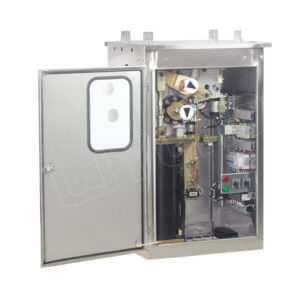
Gas System and Density Monitoring: The interior of the circuit breaker is filled with SF6 gas at a specific pressure. A precise gas system manages the filling, circulation, and sealing of the SF6. To ensure operational safety, an SF6 gas density relay, often referred to as an SF6 density meter, continuously monitors changes in gas pressure and density. Should the gas pressure drop to a preset alarm level, the relay will send a signal for replenishment. If the pressure further decreases to a lockout value, it will block the circuit breaker’s trip and close circuits, preventing erroneous operations when gas pressure is insufficient, thereby protecting the equipment.


Insulation Support System: High-performance insulating materials, such as porcelain post insulators, solid insulators (e.g., epoxy resin insulators), or composite insulators, are used to support and isolate live parts. This ensures excellent insulation performance under high voltage conditions.
Enclosure Structure: Common structural forms include:
Live-Tank (Porcelain Column) Type: The circuit breaker consists of multiple independent phases, with each phase’s internal interrupters and other live components supported by porcelain insulators.
Dead-Tank (Tank-Type) Type: In this design, interrupters, and sometimes even disconnectors, are integrated within a single, sealed metal tank filled with SF6 gas. This configuration is common in SF6 switchgear and SF6 GIS installations, offering a more compact structure, enhanced pollution resistance, and increased operational safety.
The robust SF6 circuit breaker construction contributes significantly to its compact size, lighter weight, high current interruption capacity, and long operational lifespan.
SF6 Circuit Breaker Types
SF6 circuit breakers can be categorized based on various classification criteria, with the most common being their arc-quenching principle and installation environment.
1. By Arc-Quenching Principle:
Puffer Type (or Piston Type): In this design, the operating mechanism drives a piston to compress SF6 gas, creating a high-velocity gas flow that is forcibly directed towards the arc for extinction. The arc-quenching capability of this method is relatively independent of the magnitude of the interrupted current, making it suitable for various current conditions.
Self-Blast Type: This type relies on the energy generated by the arc itself to facilitate extinction.
Rotating Arc Type: Utilizes the magnetic forces generated by the arc current itself to drive the arc to rotate rapidly on the contact surfaces, thereby achieving arc cooling and eventual extinction.
Thermal Expansion Type: Harnesses the high temperature generated during arc combustion to cause SF6 gas to rapidly expand, creating a high-pressure gas flow that blows out the arc.
The arc-quenching capability of self-blast circuit breakers is generally related to the magnitude of the interrupted current.
Hybrid Type: Combines the advantages of both puffer and self-blast principles, aiming to optimize arc-quenching performance across different current interruption scenarios.
2. By Installation Environment:
Indoor SF6 Circuit Breaker: Primarily designed for installation inside switchgear cubicles or electrical rooms. These breakers typically have lower requirements for external environmental protection but emphasize compactness.
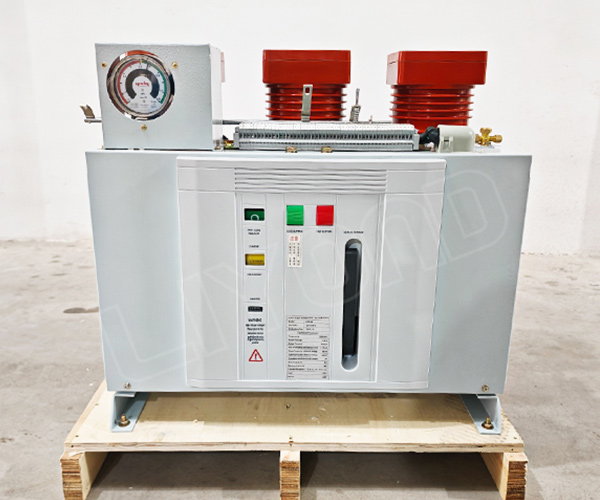
Outdoor SF6 Circuit Breaker: Specifically engineered for open-air substations and similar outdoor environments. Outdoor SF6 circuit breaker features higher protection ratings, able to withstand natural elements such as wind, rain, UV radiation, and temperature fluctuations. Their insulating enclosures usually employ porcelain or composite insulators to suit outdoor operational demands.


SF6 Circuit Breaker vs Vacuum Circuit Breaker
This section provides a comparison between an SF6 circuit breaker vs vacuum circuit breaker, two of the most widely adopted technologies in modern power systems. Understanding the distinctions between SF6 vs vacuum circuit breaker is crucial for appropriate equipment selection, as each offers unique advantages.
| Comparison Aspect | SF6 Circuit Breaker | Vacuum Circuit Breaker |
| Arc Quenching Medium | Sulfur Hexafluoride (SF6) gas | High vacuum |
| Insulation Performance | SF6 gas has high dielectric strength, offering excellent insulation performance, which can further improve with increased pressure. | Vacuum dielectric has extremely high insulating strength and very fast dielectric recovery. |
| Arc Quenching Capability | SF6 gas possesses strong electron affinity and high thermal conductivity, leading to excellent arc-quenching performance. Capable of reliably interrupting large currents and high voltages without current chopping overvoltage risks. | Highly efficient arc quenching with low arc energy and minimal contact erosion, resulting in a long electrical life. |
| Structural Complexity | Involves a gas sealing system, density monitors, and associated piping, making the overall structure relatively more complex. | The core vacuum interrupter unit has a simple structure with fewer internal components. |
| Maintenance Characteristics | Requires periodic gas pressure monitoring, leak checks, and end-of-life recycling and handling procedures for the gas. | The vacuum interrupter is typically a sealed unit, enabling long-term, maintenance-free operation. |
| Environmental Impact | SF6 gas has a high Global Warming Potential (GWP), requiring strict control over leaks and careful recycling. | Uses vacuum as a medium, with no greenhouse gas emissions, making it more environmentally friendly. |
| Typical Applications | Widely used across medium, high, and ultra-high voltage transmission and distribution systems and large substations. Particularly advantageous and mainstream for higher voltage levels. | Primarily applied in medium-voltage systems (e.12kV, 24kV, 40.5kV), with limited application in high-voltage domains. |
When evaluating vacuum circuit breaker vs SF6, the choice ultimately depends on specific voltage requirements, environmental considerations, and maintenance philosophies.
Advantages and Limitations of SF6 Circuit Breakers
The widespread use of SF6 circuit breakers in modern power systems is largely attributed to their unique features. The advantages of SF6 circuit breaker stem from the unique properties of SF6 gas, though their use is also balanced by certain inherent limitations.
Main Advantages:
Exceptional Insulation and Arc-Quenching Performance: SF6 gas exhibits a dielectric strength significantly superior to that of air, providing robust insulation under high-voltage conditions. Its highly efficient arc-quenching capability (far surpassing air) enables SF6 circuit breakers to rapidly and effectively extinguish electric arcs, ensuring safe interruption of large currents and high voltages.
High Breaking Capacity and Broad Applicability: Its outstanding arc-quenching performance allows them to reliably interrupt various overload and short-circuit currents. The interrupter gap can be designed for higher voltages, making them widely applicable across various voltage levels, and particularly indispensable in ultra-high voltage applications.
Compact Structure and Low Noise: The high-performance characteristics of SF6 gas permit a more compact and space-saving circuit breaker design. Compared to older air circuit breakers, SF6 circuit breakers operate with significantly reduced noise and do not directly expel high-velocity gas into the atmosphere, contributing to a quieter operating environment.
Low Maintenance and Long Lifespan: The sealed SF6 gas system within the circuit breaker effectively isolates internal components from the external environment, minimizing contact erosion. This leads to an extended electrical and mechanical lifespan and reduced maintenance frequency, allowing for “low-maintenance” or even “maintenance-free” operation over long periods. The breaker’s poles, which house the arc-quenching chambers, are hermetically sealed systems designed for a lifetime of maintenance-free operation.
High Safety: SF6 gas itself is colorless, odorless, non-toxic, non-flammable and chemically stable. These properties significantly reduce the risk of fire and explosion, enhancing operational safety.
Main Limitations:
Environmental Impact: Although SF6 gas is recirculated within the circuit breaker, SF6 itself is a potent greenhouse gas with a Global Warming Potential (GWP) thousands of times higher than carbon dioxide. Any leakage can have long-term potential impacts on the global climate. Therefore, strict control over SF6 gas leakage and adherence to standardized recycling and disposal procedures are imperative throughout the entire lifecycle of SF6 circuit breakers, including production, installation, operation, maintenance, and decommissioning.
High-Altitude Application Restrictions: At high altitudes, the reduced atmospheric pressure can affect the insulating and arc-quenching performance of SF6 gas. Special designs or reduced operating parameters may be necessary for equipment used in these regions to ensure reliable performance.
Relatively High Equipment Cost: Compared to some traditional VCB types, the initial investment cost for SF6 circuit breakers is generally higher. This is mainly due to the cost of SF6 gas itself, its specialized gas management requirements, and the more complex manufacturing processes involved.
Conclusion and Outlook
SF6 circuit breakers, leveraging the exceptional properties of SF6 gas, have achieved remarkable insulation and interruption performance in power systems, establishing themselves as indispensable core equipment for ensuring the grid’s safe and reliable operation. From their ingenious operating principles to their diverse structural types, and their demonstrated advantages over both vacuum and traditional air circuit breakers, SF6 circuit breaker technology undoubtedly represents a significant milestone in high-voltage switching.
However, we are also acutely aware of the environmental challenges posed by SF6 gas as a potent greenhouse gas. The global power industry is actively addressing this by implementing stricter leak control measures, developing highly efficient recycling technologies, and researching and applying new environmentally friendly alternative gases (such as eco-friendly gas mixtures, vacuum-air insulated solutions, etc.) to minimize the environmental footprint of SF6 circuit breakers.
Looking ahead, with the continued advancement of smart grids and the growing global demand for sustainable energy solutions, SF6 circuit breaker technology will continue to play a crucial role in ensuring grid resilience. Simultaneously, the industry will persistently explore and promote more environmentally friendly and efficient solutions, striving for a harmonious coexistence between power systems and the global environment.
Get A Free Quote


Power your projects with long-lasting switchgear and switchgear components from Liyond.
