

 EN
EN RU
RU


January 05, 2026
I. Understanding the Shutter Mechanism
The shutter mechanism is a critical partitioning device in withdrawable switchgear designed to automatically shield the primary stationary contacts. The mechanism opens automatically as the circuit breaker truck moves into the “service” position and closes automatically as the truck withdraws to the “test” position. Even when the truck is removed from the enclosure, the switchgear shutter mechanism ensures electrical insulation through physical shielding, effectively preventing maintenance personnel from accidental contact with high-voltage energized components.
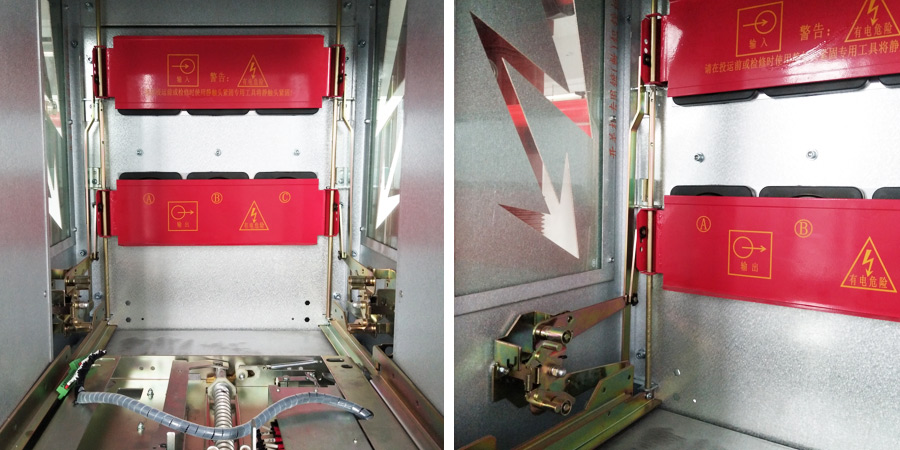
II. Material and Grading Standards for Switchgear Partitions
According to the requirements for switchgear partition classes, PM-class (Partition Metallic) units typically utilize metallic shutter mechanisms, while PI-class (Partition Insulating) units may employ shutters made of high-performance insulating materials, such as SMC (Sheet Molding Compound) composites. In the design of medium voltage metal-clad switchgear, PI-class shutter mechanisms must undergo rigorous continuity and grounding resistance tests to ensure safety and reliability in high-voltage environments.
III. Drive Mechanisms and Safety of the Shutter Mechanism
The precision of the shutter lifting system directly determines the smoothness of its operation. In actual operation, it is crucial to prevent safety hazards where the shutter mechanism fails to close automatically when the truck returns to the test position. To eliminate the risk of accidental contact with high-voltage stationary contacts, high-performance shutter mechanisms (such as the 5XS series) are typically equipped with sophisticated interlocking mechanisms and padlocking functions, ensuring the mechanism can only be driven open by the circuit breaker truck. This mandatory protection design effectively prevents high-voltage injury accidents caused by lapses in safety awareness or unauthorized operations.
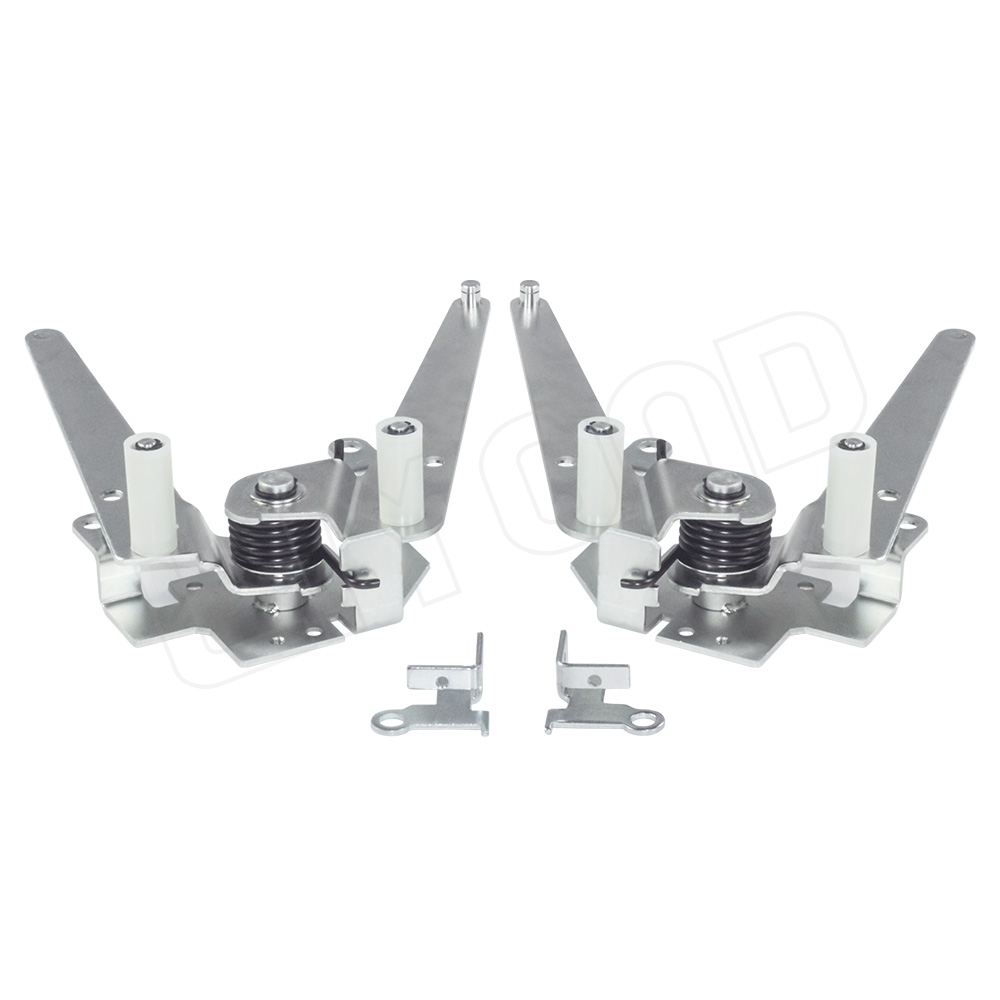


Explore Liyond Switchgear Shutter Mechanism Series
IV. Structural Features and Applications of Shutter Mechanisms in KYN Switchgear
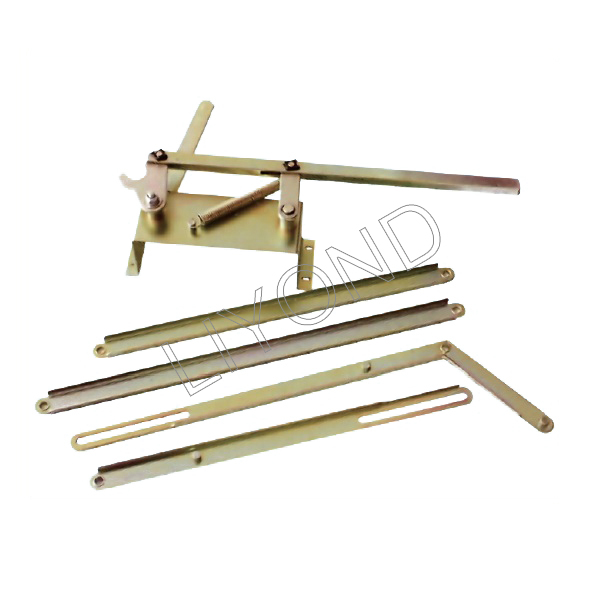
In KYN series switchgear, shutter mechanisms generally employ scissor-link or linkage-type structures. These typically consist of upper and lower main crank arms, utilizing torsion spring drives or gravity for automatic reset. When the circuit breaker truck is pushed in, its driving plate pushes the mechanism rollers, rotating the crank arms and precisely driving the shutter plates via connecting rods. Depending on the voltage level, the stroke and swing angle of the shutter mechanism must be customized to accommodate spatial variations ranging from 12kV mid-mounted units to high-insulation 24kV/40.5kV enclosures.
V. Critical Design Parameters & Verification
A critical design aspect involves the precise control of the clearance between the shutter plate and the tulip contacts. If the clearance is too small, interference and collision will occur; if the clearance is too large, it results in insufficient engagement depth. Designers must perform strict calculations based on the cabinet stroke (e.g., standard 200mm or longer strokes for higher voltage levels). The effective engagement depth must subtract the stationary contact end distance and contact fillets; if the final net value is below 15-20mm, long-term conductive stability cannot be guaranteed.
VI. Dielectric Clearances and Rotating Shutter Structures
Switchgear must strictly adhere to insulation distance requirements based on voltage levels (e.g., >125mm for 12kV, >210mm for 24kV). In compact designs, traditional vertical-lift shutter mechanisms often struggle to meet these clearance requirements. In such cases, adopting a rotating (tilting) shutter mechanism can significantly increase the distance between the shutter plate and the contact arms. This design is widely used in medium-voltage ratings (24kV/40.5kV) or specialized enclosures, utilizing a central drive to achieve axial rotation of the shutter plate, thereby ensuring sufficient safety clearance.
VII. Advanced Guiding Technologies
To improve the motion precision of the shutter mechanism and prevent jamming, guiding systems have evolved from traditional round-bar guides to aluminum alloy rails or precision guide sleeve systems. This design effectively optimizes stresses caused by truck misalignment, ensuring consistent lifting height of the shutter plates. Modern high-performance shutter mechanisms (such as the 5XS series) utilize precision slotting in the side plates or high-strength rail positioning, greatly reducing reliance on lubrication and avoiding mechanism failure caused by dust accumulation, ensuring precise resetting during long-term operation.
VIII. Engineering Precision and Reliability
As the last line of defense within withdrawable switchgear, the value of the shutter mechanism is reflected not only in the physical shielding of mechanical linkage but also in its consistency and durability under complex maintenance environments. Given the rigorous requirements for stroke control, insulation selection, and precision across different voltage levels from 12kV to 40.5kV, the selection of shutter mechanisms must balance systematic design with forward-looking engineering.
For power systems, selecting mechanisms like the 5XS series—which have undergone stringent motion simulation and lifecycle reliability design within KYN armored enclosures—is not merely about benchmarking against international technical standards. It is about providing redundant insulation margins and lower maintenance costs in compact spaces and complex working conditions. In future switchgear design, precision guidance and maintenance-free features will become key factors in enhancing the overall stability of power distribution systems.
Get A Free Quote


Power your projects with long-lasting switchgear and switchgear components from Liyond.
