

 EN
EN RU
RU


May 07, 2026
The safe operation of vacuum circuit breakers (VCBs) relies heavily on their ability to control electrical arcs. The vacuum interrupter is the core component that defines this capability, as its interruption performance and insulation levels establish the fundamental reliability benchmarks for the entire device.
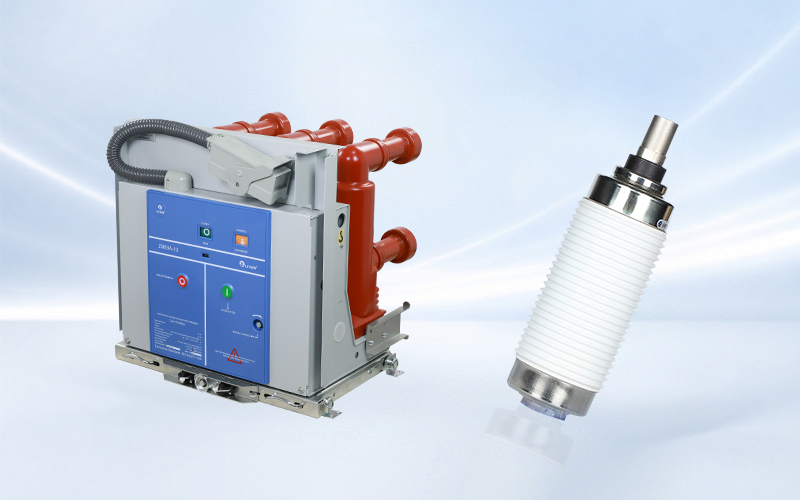
In the operation of vacuum circuit breakers, the generation and extinction of the arc are critical technical phases. When contacts separate to interrupt a circuit, the intense white light generated in the gap is the arc. With core temperatures reaching thousands or even tens of thousands of degrees Celsius, arcs can easily cause melting, evaporation, or erosion of the metal contacts. This degrades contact reliability and shortens the service life of the switch; in extreme cases, it can even lead to contact welding, rendering the breaker unable to trip. Conversely, during the interruption process, the arc acts as a temporary conductive path, effectively mitigating high switching overvoltages caused by current chopping.
To ensure high product quality, precision design, high-performance materials, and rigorous process control during manufacturing are essential. The superior performance of a vacuum interrupter stems from the integration of multiple core technologies and a systematic design approach.
Core Principles of Arc Control in Vacuum Interrupters
In air-insulated equipment, the air in the contact gap is ionized during current interruption, forming a conductive plasma channel. In contrast, when contacts are housed in a vacuum vessel, the absence of an ionizable air medium means the arc channel consists solely of metal vapor generated from the contact material. As the main circuit current naturally approaches zero, this metal vapor rapidly condenses, causing the arc to extinguish due to energy dissipation. The contact gap restores its high dielectric vacuum strength within microseconds, effectively preventing arc re-ignition. This is the essence of the vacuum interrupter—its structure primarily comprises a ceramic envelope for insulation and mechanical strength, moving and fixed contacts for current switching, and a shield to capture metal vapor and protect the internal insulation.

During high-current interruption, the arc between the contacts tends to constrict due to its own magnetic field, leading to localized overheating. To counteract this, contacts are engineered into specific shapes utilizing either Transverse Magnetic Field (TMF) or Axial Magnetic Field (AMF) structures. For instance, spiral-shaped contacts generate a transverse magnetic field that peaks at the contact periphery, driving the arc into a rapid rotational motion. This forces the arc to spread across the entire contact surface, distributing thermal stress evenly. Such a design effectively prevents localized erosion and significantly extends the overall service life of the interrupter.
Critical Conditioning Processes for Vacuum Interrupters
For a professional vacuum interrupter manufacturer, the production process does not end with sealing. Following the primary sealing and evacuation process, vacuum interrupters undergo two essential “conditioning” stages—High-Voltage Conditioning and Current Conditioning—to ensure all technical parameters meet application standards. These processes significantly enhance the capacitive switching margin and reduce operational risks, both carrying equal technical weight.
High-Voltage Conditioning
By applying high-voltage pulses to repeatedly break down the interrupter, microscopic protrusions, as well as metallic and non-metallic particles on the contacts and shields, are cleared. This process substantially improves the overall dielectric strength of the device.
Current Conditioning
By applying high currents, a sustained diffuse arc is formed between the contacts. Under the influence of this arc, the microscopic surface quality of the contacts becomes smoother, forming a more stable and dense fine-grained layer. This significantly bolsters the contacts’ resistance to arc erosion and mechanical wear, further optimizing the interruption capacity and operational life of the unit.
How High-Performance Vacuum Interrupters Empower Vacuum Circuit Breakers
In ensuring power system security, every switching operation of medium-voltage switchgear is a rigorous test of its comprehensive reliability. The core value of a VCB is reflected in its precision engineering, stringent quality management, and stable electrical performance.
High-quality VCBs are typically equipped with rigorously screened, high-performance vacuum interrupters. Beyond ensuring the machining precision of internal components, the finished products must undergo “double conditioning” (high voltage and high current) to guarantee maximum operational reliability. Premium VCB series can achieve numerous full-capacity short-circuit interruptions and mechanical endurances of tens of thousands of cycles, while reliably handling demanding conditions such as back-to-back capacitor bank switching.
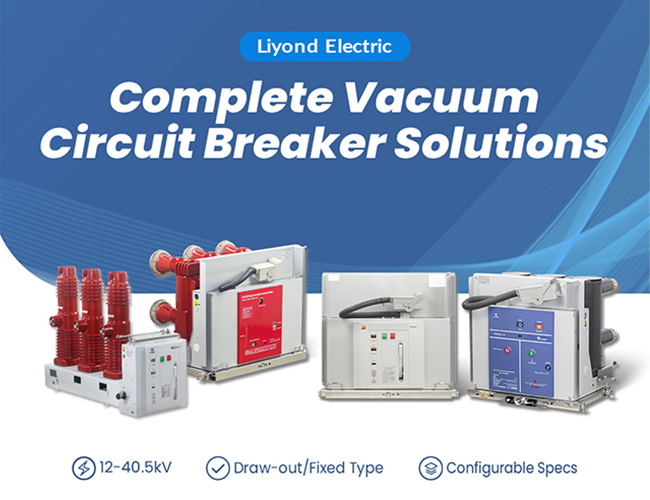
Compared to equipment using other quenching media, vacuum circuit breakers offer distinct advantages including high reliability, environmental friendliness, and low maintenance costs—largely due to the stable performance of the vacuum interrupter. The interrupter must maintain superior vacuum integrity over a design life of several decades while ensuring absolute insulation safety during frequent operations. High-performance VCBs, powered by these advanced interrupters, provide the solid technical foundation required for the construction of modern power systems.
As a professional vacuum circuit breaker manufacturer, Liyond is dedicated to providing high-performance vacuum circuit breakers and interrupter solutions that meet the highest industry standards. For project requirements or technical inquiries, please contact our team of experts for customized professional advice and support.
Get A Free Quote


Power your projects with long-lasting switchgear and switchgear components from Liyond.
