

 EN
EN RU
RU


September 15, 2025
When it comes to the core equipment of modern power systems, Gas Insulated Switchgear (GIS) stands out for its compactness, high reliability, and low maintenance. Unlike traditional Air Insulated Switchgear (AIS), the unique feature of GIS is that it encapsulates all live core components within a sealed enclosure filled with a high-performance insulating gas, typically SF6. This fully enclosed design not only significantly reduces the equipment’s size but also allows it to adapt perfectly to various harsh environments, from humid coastal areas to dusty industrial sites. Understanding the gas insulated switchgear components allows us to better grasp how they work together in an SF6 environment to ensure the safe and efficient operation of the power grid.
Core Components: The Foundation of GIS
A complete MV GIS switchgear is comprised of a series of core components that form the basis for power transmission and control. Following the integrated design philosophy of GIS, these components do not exist in isolation but are ingeniously integrated into a compact gas-tight enclosure, working together to transmit, interrupt, and protect electrical energy.


Vacuum Circuit Breaker
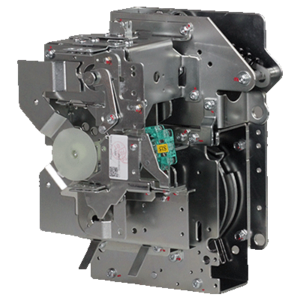
The circuit breaker is the heart of the GIS, responsible for interrupting current under both normal operating and fault conditions (e.g., short circuits). As the mainstream choice for current GIS, the vacuum circuit breaker utilizes a vacuum as its arc-extinguishing medium for rapid arc suppression. It boasts excellent breaking capacity and an exceptionally long electrical life, making it crucial for ensuring power system stability. Furthermore, in GIS, vacuum circuit breakers typically use a withdrawable structure. The design of withdrawable type circuit breaker allows the circuit breaker to be easily moved out for maintenance or replacement without affecting the normal operation of other circuits, significantly enhancing serviceability and power supply reliability. The vacuum interrupter is encapsulated within SF6 gas, which primarily serves as insulation to ensure the equipment’s miniaturization and high safety.

Disconnector & Earthing Switch
In GIS, the disconnector and earthing switch together form a complete safety chain. The MV disconnector is used to create a visible electrical isolation gap before maintenance, physically separating the maintenance circuit from the live parts. It is worth noting that in GIS with withdrawable circuit breakers, the withdrawal of the breaker itself creates the isolation gap, simplifying the operation. Subsequently, the grounding switch closes, grounding the de-energized conductor reliably. This operation safely releases any residual charges and provides continuous protection, ensuring absolute safety for personnel during maintenance. The coordinated action of these two components is an essential part of GIS safety regulations.
Busbars
As the conductors for power transmission and distribution, the design of busbars in a GIS embodies its core advantages. Unlike AIS, which requires a large air clearance for insulation, GIS busbars are encapsulated within a compact SF6 gas compartment. The superior insulating properties of SF6 gas allow the distance between busbars to be very small, resulting in the ultimate compactness of the GIS. This fully enclosed structure also ensures that the busbars are unaffected by the external environment, greatly enhancing system stability and reliability.
Measuring and Protection Components
To ensure the safe operation of the power grid, a GIS must have keen monitoring and control capabilities. These components enable real-time monitoring of the grid status and rapid response to abnormalities. The perfect collaboration between instrument transformers and the microprocessor-based protection system is fundamental for achieving smart monitoring and fast decision-making in a GIS.
Current & Voltage Transformers
Instrument transformers are the measuring system of the GIS, used to convert high voltages and large currents into low-voltage and small-current signals that can be used by protection and measurement instruments. The precise acquisition of these signals is a prerequisite for a GIS to be accurately monitored and protected. Because they are also encapsulated in SF6 gas, GIS instrument transformers are protected from moisture and contamination, ensuring long-term stable measurement accuracy. This is crucial for accurate billing and fault analysis.
Protection and Control System
This is the control core of the GIS, responsible for processing signals from the instrument transformers and making decisions. Once the system detects any abnormality (such as a short circuit, overload, or ground fault), the protection system will quickly issue a command to trip the vacuum circuit breaker. This millisecond-level response speed is key to protecting expensive equipment and ensuring the safe operation of the power grid. Its highly integrated design also simplifies on-site commissioning and maintenance.
Structural and Auxiliary Components
In addition to the core electrical components, a GIS relies on a series of structural and auxiliary components to ensure its safe and reliable operation. These parts play a critical but often unseen role, collectively providing a robust and secure operating and maintenance environment for the GIS.
Gas-Insulated Enclosure & Housing
The defining feature of a GIS is its sealed metal enclosure, which is more than just a “cabinet”; it is the carrier of the SF6 gas insulation system. The SF6 gas inside the enclosure provides the core insulation and arc-extinguishing environment, while the enclosure itself offers strong physical protection. Additionally, GIS units are classified into indoor and outdoor types based on the installation environment. Outdoor products feature special designs for the enclosure and housing, such as anti-corrosion coatings and enhanced sealing, to withstand harsh climates.
Charged Display Device, Electromagnetic Lock, Heater & Interlocking Mechanism
These auxiliary components collectively form the safety assurance system of a GIS:
- Charged Display Device: Provides a visual indication of whether a circuit is live, ensuring the safety of operating personnel.
- Electromagnetic Lock: Works in close coordination with the interlocking mechanism to physically prevent operations in an unsafe state.
- Block Heater: Used to maintain stable temperature within the cabinet, preventing condensation and thus protecting insulation performance.
- Interlocking Mechanism: This is the core of anti-misoperation. It forces operators to follow correct safety procedures through mechanical or electrical means. For example, it ensures that isolation and earthing operations can only be performed when the circuit breaker is in the open position.
Auxiliary Switch
The auxiliary switch is an indispensable component in the control circuit of a GIS. It is typically installed on the operating mechanism of the main switch (e.g., the vacuum circuit breaker) and its function is to accurately indicate the open or closed status of the main switch. These status signals are sent to the control and protection system, providing accurate feedback to the operator and serving as a key part of the electrical interlocking circuit to ensure the correctness of control and operation.
Cabinet Light Lamp
The cabinet light lamp is a very practical auxiliary component used to provide lighting for maintenance personnel inside the cabinet, especially in low-light conditions. While it does not directly affect the electrical function, it is crucial for daily maintenance and inspection.
Cable Connections & Bushings
Cable connections and bushings are the interfaces that connect the GIS to the external power grid. GIS uses special sealed bushings and connectors to ensure that cables can be safely and reliably introduced and connected to the busbars inside the cabinet, while maintaining the gas-tightness of the entire system. This design simplifies on-site installation and avoids the risk of traditional cable terminals being exposed.



Summary: Liyond’s GIS Components & Solutions
In summary, every component of a GIS is meticulously designed and deeply integrated, collectively forming a superior power solution. Its core advantages go far beyond its compact size; they lie in the high reliability, excellent environmental adaptability, and extremely low maintenance requirements brought about by its SF6-sealed design.
A complete GIS operates like a coordinated organism. From the vacuum circuit breaker that functions as its heart for current interruption, to the interlocking mechanisms that ensure safe operation, and the instrument transformers that precisely capture the grid status, every link is vital. It is this highly integrated design philosophy that makes GIS an ideal choice for achieving efficient and stable power supply in limited spaces.
As a professional gas insulated switchgear manufacturer, Liyond provides high-quality GIS solutions, with a focus on various types of indoor GIS. Our products perfectly integrate these key components to provide a safe, reliable, and efficient power supply for urban distribution, industrial applications, data centers, and other critical areas. Choosing Liyond is choosing a comprehensive, professional, and trustworthy power partner.
Get A Free Quote


Power your projects with long-lasting switchgear and switchgear components from Liyond.
