

 EN
EN RU
RU


September 02, 2025
The vacuum interrupter (VI) is a highly versatile device used to safely interrupt electric current by extinguishing the electrical arc. While it has a range of applications, it is most notably the central component of a vacuum circuit breaker, acting as its arc-extinguishing chamber and the heart of its switching function. In essence, it is a sealed, vacuum-tight ceramic envelope containing a fixed contact and a moving contact. This simple yet highly effective design allows the interrupter to quickly and safely extinguish an electrical arc, thereby protecting the power system from faults and ensuring reliable operation.
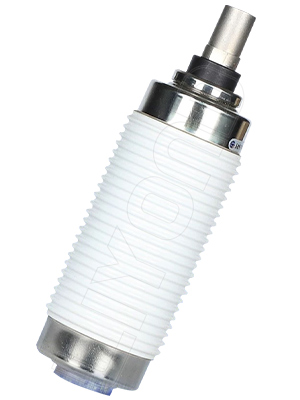
Key Components of a Vacuum Interrupter
A vacuum interrupter is a carefully engineered device consisting of several key parts that work in perfect synergy to ensure safe and effective operation.
- Vacuum Envelope: This is the outer shell of the vacuum interrupter, typically made of high-strength ceramic. It is designed to maintain the ultra-high vacuum inside and withstand mechanical stresses.
- Fixed and Moving Contacts: These are the electrodes inside the vacuum envelope. They are made from special alloys that are resistant to arc erosion and have low gas content. The moving contact is connected to a bellows, while the fixed contact is stationary.
- Bellows: This is a crucial, flexible component that allows the moving contact to travel back and forth without compromising the vacuum seal. The bellows ensures the integrity of the sealed vacuum chamber throughout the life of the vacuum interrupter.
- Arc Shields: These components are strategically placed inside the vacuum envelope to protect the ceramic shell from the metal vapor generated during arcing. They help to contain the arc, facilitate the diffusion of contact material, and maintain the insulation properties of the interrupter’s internal surfaces.

Vacuum Interrupter Working Principle
The primary purpose of a vacuum interrupter is to safely switch currents on and off. When the contacts inside a vacuum interrupter bottle open to interrupt a current, a hot electrical arc is momentarily formed between them. The interrupter’s crucial role is to extinguish this arc quickly and completely. This process relies on the extremely high vacuum inside the sealed chamber, which serves as an excellent insulating medium.
As the contacts separate, the arc’s heat vaporizes a small amount of the contact material, but the high vacuum rapidly diffuses these metal ions. This diffusion, along with the quick separation of the contacts, causes the arc to lose the energy needed to sustain itself. At the next current zero-crossing, the arc is extinguished, and the vacuum immediately restores the dielectric strength between the contacts, preventing the arc from reigniting. This highly efficient process ensures a rapid and reliable interruption.
Why Vacuum Technology?
For decades, technologies like oil and SF6 gas used in switchgear were used to extinguish electrical arcs in circuit breakers. However, these methods came with significant drawbacks, including fire hazards, maintenance-intensive operations, and environmental risks from harmful gas emissions. The development of vacuum technology offered a revolutionary alternative that addressed these challenges, making it the modern standard for medium-voltage switching.
Benefits of Vacuum Interrupters
Vacuum interrupters are the modern standard for medium-voltage circuit breakers due to their numerous advantages over older technologies.
- High Performance: These interrupters offer incredibly fast arc extinction and short contact travel, allowing for rapid fault clearing and minimal contact wear.
- Long Mechanical and Electrical Life: The minimal erosion of the contacts in a vacuum environment results in an exceptionally long operational lifespan, reducing the need for frequent replacements.
- Environmentally Friendly: Vacuum interrupters are an eco-friendly solution because they do not use harmful and potent greenhouse gases like SF6 (sulfur hexafluoride) for arc quenching.
- Minimal Maintenance: The sealed design means that these interrupters are essentially maintenance-free. There is no need for regular gas or oil checks, and their lifespan is often measured in tens of thousands of operations.
The high reliability and performance of these components are not accidental; they are a direct result of precise engineering and manufacturing. This highlights why choosing a professional vacuum interrupter manufacturer is critical to ensuring long-term product value and safety.
Application of Vacuum Interrupters
Because of their reliability, safety, and performance, vacuum interrupters are widely used in a variety of medium-voltage power systems. Their specific application depends on the type of switching equipment they are integrated into.
Vacuum Circuit Breakers (VCBs)
In VCBs, the vacuum interrupter is used for both normal load switching and, critically, for safely interrupting high-energy short-circuit fault currents. The interrupters used in vacuum circuit breakers are highly robust and designed to withstand the immense stress of a fault, making them essential for protecting equipment and ensuring grid stability.


Load Break Switches (LBSs)
The vacuum interrupter in a load break switch is designed for normal load current interruption only. Unlike a VCB, an LBS load break switch is not rated to break a short-circuit fault current. It is primarily used to switch a circuit on or off under normal operating conditions, relying on an upstream protection device (like a fuse or circuit breaker) to clear a fault.
Disconnect Switches
In a disconnect switch, the vacuum interrupter’s role is to interrupt the small current that can flow through a circuit after it has been de-energized, known as a charging current. This ensures the circuit is safely isolated and ready for maintenance. While not designed for fault current interruption, the vacuum interrupter’s ability to handle this low-level current prevents dangerous arcing and ensures a clean break.
Vacuum Reclosers and Sectionalizers
In overhead power distribution networks, vacuum reclosers use a vacuum interrupter to automatically and repeatedly interrupt and re-establish the circuit to clear temporary faults (e.g., a tree branch touching a line). Sectionalizers, used in coordination with automatic circuit recloser, also use vacuum interrupters to automatically isolate a permanent fault after the recloser has operated a set number of times.
Vacuum Contactors
Vacuum contactors are high-frequency switching devices widely used in industrial applications, particularly for controlling motors. The vacuum interrupter is an ideal choice for this application because it offers a long mechanical and electrical life, capable of handling tens of thousands of operations without requiring maintenance, making it perfect for frequent switching cycles.
Related reading: What is Vacuum Contactor
Conclusion
The vacuum interrupter stands as a pivotal advancement in modern electrical switching technology. Its ability to efficiently and safely extinguish an electric arc within a sealed vacuum environment has made it an indispensable component across a wide range of medium-voltage applications, such as MV switchgear and other industrial and commercial power distribution systems. By offering superior performance, a long lifespan, minimal maintenance, and an environmentally friendly design, the vacuum interrupter has become the core of reliable and safe power systems. Its versatility, from the heavy-duty demands of a circuit breaker to the frequent switching of a contactor, cements its position as a cornerstone of modern electrical infrastructure.
Get A Free Quote


Power your projects with long-lasting switchgear and switchgear components from Liyond.
