

 EN
EN RU
RU


August 21, 2025
Selecting the appropriate vacuum circuit breaker (VCB) is a critical decision that directly impacts the safety, reliability, and efficiency of your electrical power system. With a wide array of VCB types available, making the right choice requires careful consideration of various operational and environmental factors. Finding the ideal vacuum circuit breaker for your specific application involves a methodical evaluation of key aspects that ensure optimal performance and seamless integration.
1. Understanding Your Power System’s Core Requirements
The journey to choosing the right VCB types begins with a clear understanding of your electrical network’s fundamental characteristics. These parameters will immediately narrow down the suitable options.
- Rated Voltage and Current: What is the nominal voltage of your system (e.g., 12kV, 24kV, 40.5kV)? What is the maximum continuous current that the circuit breaker will typically carry (e.g., 630A, 2500A, 4000A)? These are the primary electrical specifications that define the operational range of the VCB. Ensuring a match here is non-negotiable for system compatibility and safety.
- Short-Circuit Breaking Capacity: What is the maximum fault current that the VCB must be capable of interrupting safely without damage to itself or other equipment (e.g., 20kA, 31.5kA, 50kA)? This value is crucial for system protection and must align with the potential fault levels of your network.
As an experienced vacuum circuit breaker manufacturer, Liyond offers VCBs across all standard medium voltage, low current, and high current ratings, alongside breaking capacities from 20kA to 50kA, engineered to precisely match these fundamental electrical demands of your power system.
2. Evaluating VCB Installation and Mounting Methods
Beyond electrical ratings, the physical integration of the vacuum circuit breaker into your MV switchgear or substation is a key consideration. This involves assessing how the VCB will be installed and its mounting configuration.
- Fixed vs. Withdrawable Types: Consider your maintenance philosophy and the importance of minimizing downtime. Do you require the flexibility of a withdrawable type circuit breaker, which allows for easier and safer removal for maintenance or quick replacement, thereby reducing system downtime? Or is a more permanently integrated fixed type suitable for your application, potentially offering a simpler installation and lower initial cost?
- Front-Mounted vs. Side-Mounted Configurations: Evaluate the design of your switchgear cabinet and available space. Does the layout necessitate a front-mounted VCB, offering convenient access for connections and maintenance from the front of the panel? Or would a side-mounted configuration be more suitable, potentially optimizing floor space or aligning with specific busbar layouts?
- Pole Distance: This critical physical dimension ensures compatibility with your existing or planned switchgear cubicle. What is the required center-to-center distance between the poles (e.g., 150mm, 210mm, 275mm, or other specific spacing)? A precise match here is vital for seamless physical integration.
Liyond supplies both fixed and withdrawable VCB types, along with front-mounted and side-mounted configurations, and can accommodate specific pole distance requirements to ensure optimal physical integration and operational continuity for your switchgear solutions.


3. Considering the VCB Operating Environment
The environment in which the vacuum circuit breaker will operate significantly influences its construction and the protective features it requires to ensure reliable long-term performance.
- Indoor vs. Outdoor Applications: Will the VCB be installed indoors, within a protected and controlled environment such as a building or industrial facility, where it is shielded from direct weather exposure? Or will it be situated outdoors, requiring robust weather resistance against rain, snow, direct sunlight, and extreme temperatures?
Choosing a VCB designed for its intended environment is paramount for preventing premature degradation, ensuring safety, and maintaining operational integrity. Liyond provides durable indoor VCB and outdoor VCB, engineered to perform reliably across diverse environmental conditions.
4. Assessing Operational Needs and Mechanism Type
The frequency of operation and the type of operating mechanism chosen can impact the vacuum circuit breaker’s lifespan, maintenance requirements, and overall performance.
- Operational Frequency: How often will the VCB need to switch (open and close)? Applications requiring very frequent operations (e.g., arc furnace control, capacitor bank switching) will benefit from mechanisms designed for higher mechanical endurance.
- Spring vs. Magnetic Operating Mechanism: Do you prefer the robust simplicity and proven reliability of a spring operating mechanism, which is widely adopted for general-purpose applications? Or would the benefits of a magnetic operating mechanism, such as very high operating speeds, extremely long mechanical life (due to fewer moving parts), and lower maintenance requirements, be more advantageous for your specific needs?
Liyond offers VCBs equipped with both spring and magnetic operating mechanisms, catering to varying operational demands and mechanical life expectations.

5. Choosing the Right Insulation Type of VCB
The insulation type chosen for a vacuum circuit breaker plays a crucial role in its dielectric strength, safety, and resilience against environmental factors.
- Embedded Pole vs. Insulated Tube: Do you require an advanced design of embedded pole for superior insulation, enhanced protection against environmental factors (like humidity and pollution), and increased reliability due to its sealed, solid insulation? Or is an insulated tube design sufficient for your application, offering a more traditional and potentially cost-effective insulation solution?
Liyond offers both options, with the embedded pole providing enhanced long-term reliability, especially in challenging environments, reflecting a balance of performance and investment.
6. Partnering with a Reliable Vacuum Circuit Breaker Manufacturer: Liyond’s Solutions
Once you have assessed your system’s specific requirements across these key factors, partnering with an experienced vacuum circuit breaker supplier is the next crucial step. Liyond is dedicated to guiding you through the selection process and providing high-quality solutions.
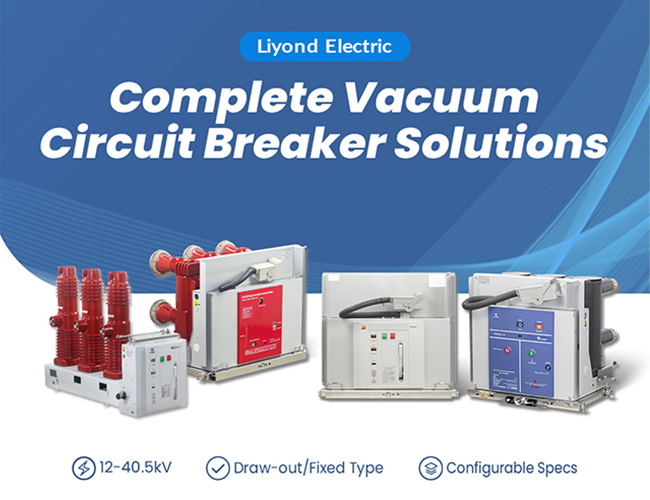
- Liyond’s Comprehensive VCB Product Range: Our extensive portfolio of vacuum circuit breakers encompasses all the types discussed in this guide – by voltage, current, installation, mounting, environment, and operating mechanism. This allows us to provide precise matches for your needs, ensuring you find the optimal VCB, all offered at competitive prices.
- Expert Consultation: Navigating the complexities of VCB selection can be challenging. Liyond’s team of experts is ready to provide professional guidance, helping you assess your specific application details and recommend the ideal VCB model.
- Seamless Ordering Process: Once you’ve made your selection, our streamlined ordering process ensures accurate product fulfillment based on your specified parameters.
7. The Importance of VCB’s Quality, Support, and Long-Term Value
Choosing a vacuum circuit breaker is not just about meeting current specifications; it’s an investment in the long-term reliability and safety of your power system. Prioritizing quality, comprehensive support, and long-term value from your manufacturer is paramount.
To fully realize this long-term value and ensure the continuous, safe functioning of your investment, consistent care is also critical. Even the most robust VCB will only perform optimally and extend its operational lifespan with diligent attention. Regular inspection, proper operation, and adherence to maintenance schedules are essential to maximizing your investment and maintaining peak performance. For detailed guidance on maintaining your VCB, refer to our comprehensive Vacuum Circuit Breaker Daily Inspection Guide.
At Liyond, as a leading switchgear manufacturer, we are committed to providing high-quality, reliable, and performance-driven VCB solutions. We pride ourselves on offering flexible switchgear solutions tailored to ensure the efficiency and safety of your power system, whether it involves standard configurations or specific custom requirements. This adaptability is key to how we approach every partnership.
Contact Liyond today to discuss your vacuum circuit breaker requirements and discover how our solutions can empower your operations.
Get A Free Quote


Power your projects with long-lasting switchgear and switchgear components from Liyond.
