

 EN
EN RU
RU


December 01, 2025
In the medium-to-high voltage electrical insulation field, material reliability is critical for stable system operation. Cycloaliphatic epoxy resins, owing to their excellent electrical performance, mechanical strength, and superior process plasticity, have become the core material for manufacturing various medium/high voltage switchgear components (such as bushings and switchgear insulators), occupying an irreplaceable and important position. Although epoxy resins and traditional insulation materials like porcelain have diverse formulations and specific performance indicators that make absolute precise comparison difficult, a general analysis and summary of their key characteristics can clearly identify the advantages of epoxy resins and provide important references for engineering application selection.

Advantages of Physical Properties in Electrical Epoxy Resins
Electrical epoxy resins, due to their exceptional physical properties, are capable of serving as critical structural support components in heavy-load and high-stress environments. These inherent physical advantages are not only the basis for ensuring long-term equipment operation but also directly determine the component’s ability to resist mechanical shock, temperature variations, and deformation. Below are the significant comparative advantages exhibited by epoxy resins compared to traditional materials:
- Lightweight: The weight of cycloaliphatic epoxy resins is over 70% lower than that of porcelain, meaning epoxy resin insulators are significantly lighter than porcelain insulators.
- Thermal Expansion Coefficient: The thermal expansion coefficient of epoxy resin is approximately 1/20th that of porcelain.
- Mechanical Strength:
- Epoxy resin’s tensile strength is approximately 11 times that of glazed porcelain.
- Epoxy resin’s compressive strength is about 4 to 6 times that of glazed porcelain.
- Epoxy resin’s bending strength is about 16 to 18 times that of glazed porcelain.
- Impact Strength: The unnotched impact strength of epoxy resin is roughly comparable to that of glazed porcelain.
- Dimensional Control: Epoxy resin allows for easier achievement of precise dimensions and shape control than porcelain.
- Repairability: Porcelain cannot be repaired, while epoxy resin possesses limited repair potential.
Electrical Performance and Endurance of Electrical Epoxy Resins
While epoxy resins are renowned for their structural advantages, their electrical performance, as a core insulating medium, is fundamental in defining their scope of application. While ensuring the system’s medium-to-high voltage isolation capability, indicators such as dielectric constant, thermal rating, and tracking resistance must meet stringent standards. Focused on the critical functional requirements of electrical insulation, the following are the main comparative relationships in the electrical performance domain for epoxy resins:
- Dielectric Constant: Epoxy resin’s dielectric constant is about two-thirds that of porcelain.
- Temperature Rating: Porcelain has a much higher temperature rating than epoxy resin, however, epoxy mixtures with temperature ratings of 105℃ or 130℃ are readily achievable.
- Tracking Resistance: Epoxy resin’s tracking resistance is slightly lower than that of porcelain.
- Water Absorption: Epoxy resin’s water absorption rate is slightly higher than porcelain but remains within the 1% range.
- Chemical Resistance: Epoxy resin exhibits excellent resistance to common industrial chemicals, is easy to clean, and possesses superior resistance to corrosion and weathering.
Epoxy resin’s excellent physical properties make it the material of choice for insulation, even with minor compromises in electrical performance. This is particularly crucial for high-intensity applications requiring resistance to severe dynamic loads (such as support insulators in circuit breakers and switchgear).
Applications of Electrical Epoxy Resins in MV Switchgear
Leveraging its high insulation properties, excellent mechanical strength, and easy moldability, electrical epoxy resin has critical and extensive applications in medium-to-high voltage switchgear equipment, serving as a core component to ensure the safe operation of power systems. Key products include:
- Epoxy Resin Bushing: Used to pass through switchgear compartments, or as the output terminal for transformers and capacitors, and frequently applied as a GIS bushing, providing high-voltage isolation and electrical connection.
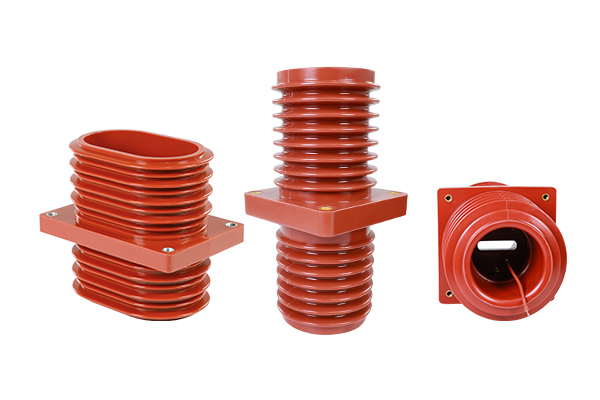

- Epoxy Resin Insulator: Encompasses support insulators and wall bushings, providing structural support and reliable electrical isolation within circuit breakers and switchgear.
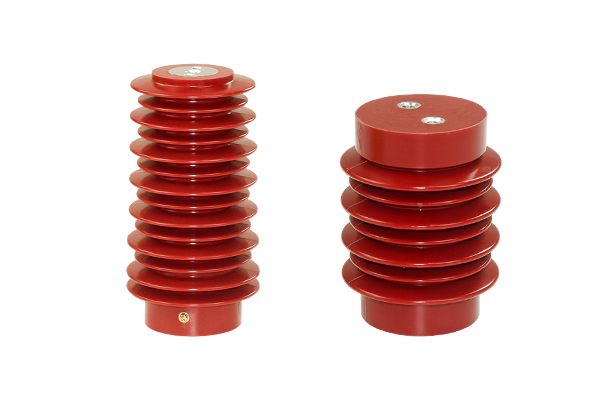
- Switchgear Contact Box: Serves as a core insulating component within the switchgear, used to encapsulate and protect live contacts, ensuring phase-to-phase and phase-to-ground insulation, which is critical for the safe operation of the switchgear.
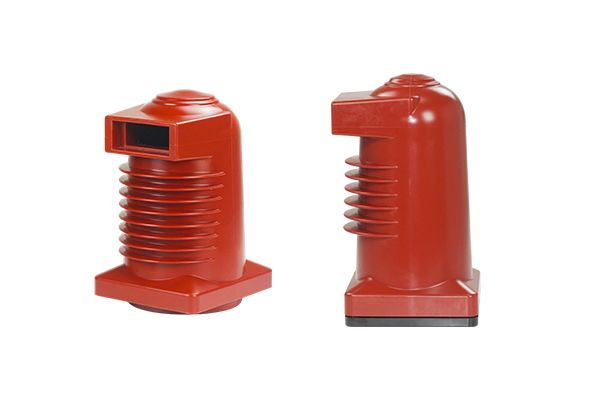
- VCB Insulating Cylinder: Used in Vacuum Circuit Breakers (VCB) to provide high-strength insulation and structural support, isolating the vacuum interrupter chamber from the external environment and ensuring reliable operation of the interrupter.
These applications directly utilize the dual advantages of epoxy resin in physical properties (high strength, light weight) and electrical properties (high dielectric strength), ensuring the compact design, safety, reliable operation, and long-term durability of power equipment.
Manufacturing Process and Safety Operations for Electrical Epoxy Resins
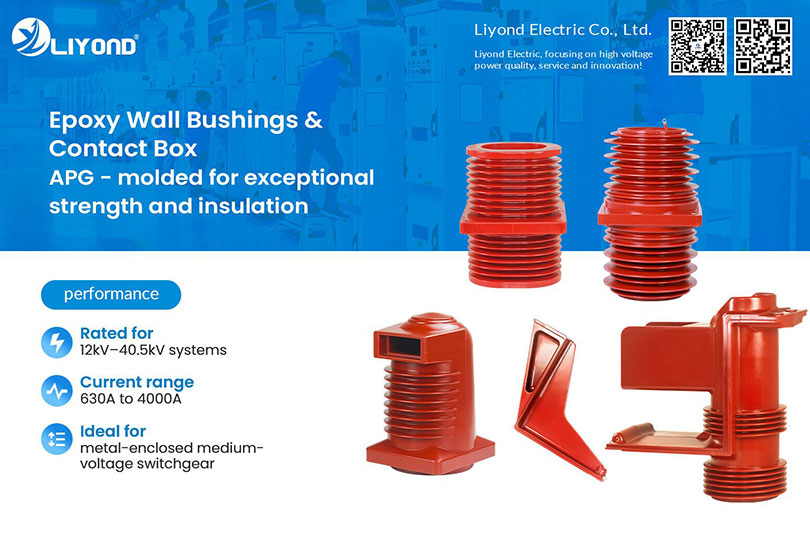
Built upon its excellent insulation properties, electrical epoxy resin, combined with the application of advanced molding technologies like Automatic Pressure Gelation (APG), has significantly enhanced product quality and production efficiency. This has led to its extensive application in areas such as medium/high voltage components, solidifying its indispensable core position. However, as a widely used industrial material, ensuring the long-term, high-efficiency operation of epoxy resin products requires attention to their manufacturing process flow and safety operational standards.
1. Operational Safety Protocols
Strict protective measures must be adhered to during epoxy resin operations:
- Personal Protection: Operators are required to wear protective clothing, gloves, goggles/safety glasses, and the use of masks/dust respirators is recommended.
- Spill Management: Spilled material should be absorbed with sawdust or waste cotton and placed in a plastic basket for disposal.
- Workshop Environment: The workshop is recommended to maintain a ventilation and air exchange rate of 3 to 5 times per hour.
- First Aid Measures: In case of eye contact, immediately flush with clean, running water for 10 to 15 minutes and seek medical attention. If skin is contaminated, wipe off the material and wash the affected area with running water. In case of severe pain or burns, seek immediate medical attention. Contaminated clothes must be changed immediately. If discomfort is experienced due to vapor inhalation, move immediately to fresh air. If there are any concerns, seek medical advice promptly.
2. Energy Consumption and Efficiency
In terms of efficiency, Automatic Pressure Gelation (APG) technology represents a significant breakthrough in epoxy resin molding processes. It utilizes automation and pressure curing to significantly shorten demolding time, improve production efficiency, and ensure products have higher geometric accuracy and fewer defects. This efficient molding method allows epoxy resin insulators to meet the demands of large-scale, high-standard industrial production. However, the manufacturing process for epoxy resins also is characterized by high energy consumption, high heating temperatures during production, and long duration.
| Process Parameter | APG (Automatic Pressure Gelation) | Conventional Vacuum Casting |
| Mold Temperature | 130℃ to 160℃ | 70℃ to 100℃ |
| Demolding Time (Dependent on mold temperature and casting volume) | 10 to 40 min | 5 to 8 h |
| Curing Conditions (Minimum curing time) | 4 h (130℃) or 3 h (140℃) | 12 h (130℃) or 8 h (140℃) |
III. Sustainability and the Future Direction of Materials
Electrical epoxy resins, due to their excellent overall performance, are the indispensable cornerstone material in the manufacturing of medium/high voltage components. This superior comprehensive performance enables their widespread application in core medium/high voltage switchgear products such as bushings and support insulators, playing a critical role in ensuring the safety and stable operation of the power system, making them a core functional component in modern distribution networks. However, despite their mainstream market position, as a typical thermoset material, epoxy resin waste currently faces inherent challenges related to difficulty in dismantling and disposal, which poses considerations for environmental sustainability. Although the cured product is not classified as hazardous waste, and over 90% of such waste is currently disposed of via landfill, the continuous increase in waste material and limitations in disposal space have intensified the demand for more sustainable reuse technologies. Specifically, the metal inserts widely embedded in epoxy insulators must be removed before recycling, and even with methods like cryo-treatment, the quality of the recovered material is often subpar, leading to insufficient economic appeal for reuse as construction material.
Therefore, in the face of these challenges and the industry’s increasing emphasis on environmental responsibility, the power industry and manufacturers remain committed to enhancing overall product performance while continuously investing in R&D to pursue more sustainable solutions. Among these, high-performance engineering thermoplastics have emerged as one of the most important development directions. Compared to thermoset epoxy resins, these thermoplastic materials offer distinct advantages in higher production efficiency and lower energy consumption. Although their critical electrical and mechanical properties are still undergoing continuous optimization and validation, they show enormous developmental potential. Crucially, the strong recyclability inherent in thermoplastic materials positions them as a strong candidate for fundamentally addressing the environmental challenges faced by epoxy resins at the end of their life cycle, representing a significant path for the sustainable future of insulation materials in distribution networks.
Get A Free Quote


Power your projects with long-lasting switchgear and switchgear components from Liyond.
