

 EN
EN RU
RU

 Home/Blogs/Industry Knowledge/Porcelain vs. Epoxy Resin Insulators: A Comparison of Application Characteristics
 June 10, 2026
In the design and manufacturing of electrical power equipment, the selection of insulating materials directly dictates the reliability and service life of the equipment under varying operating environments. Porcelain and epoxy resin, the two most widely used insulating media in medium- and high-voltage electrical insulators, exhibit distinct physical properties when subjected to extreme weather conditions and precise spatial constraints. As the power industry shifts toward miniaturization and digital transformation, a comprehensive understanding of the performance of these materials in specific application scenarios has become a critical consideration in equipment R&D and maintenance.
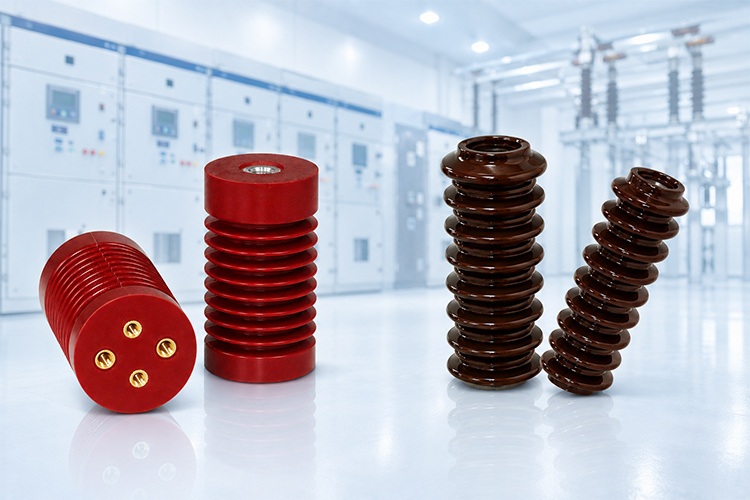
I. Outdoor Environments and Porcelain Insulators
Porcelain insulators, inherently derived from inorganic minerals fired at high temperatures, have long served as the standard configuration for outdoor type switchgear installations.
- Core Characteristics:
- Outstanding Weatherability: Exceptional resistance to ultraviolet (UV) radiation and acid rain, ensuring immunity to photo-oxidative degradation during long-term outdoor exposure.
- Physical Stability: Exceptional material hardness, maintaining long-term insulating reliability under harsh outdoor operating conditions.
- Typical Engineering Applications:
- Transmission Lines: Suspension insulator strings used to support high-voltage overhead lines.
- Substation Facilities: Support pillars for outdoor disconnectors, surge arrester pillars, and busbar support insulators.
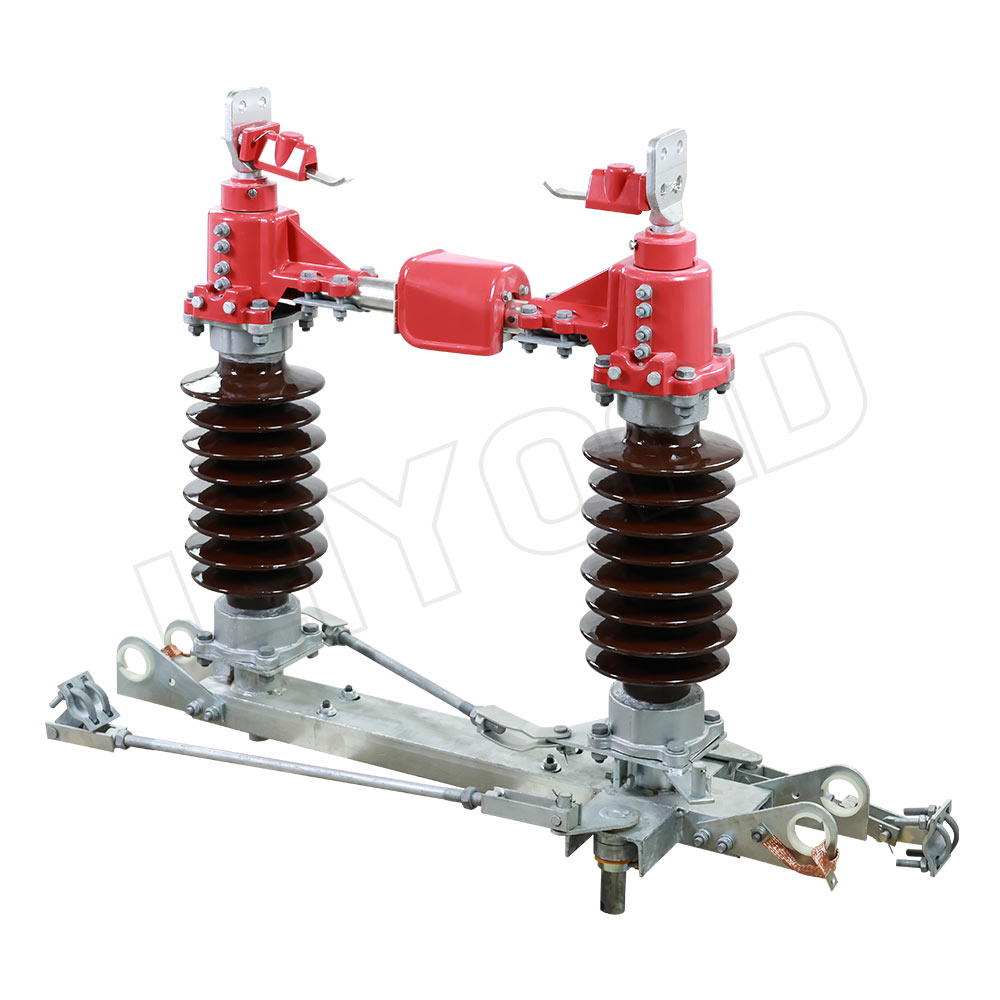

The manufacturing process of porcelain dictates a highly standardized geometric form factor to ensure structural stability and mechanical strength during firing. When addressing complex structural designs or highly modularized conductive metallic components, the inherent properties of porcelain require the overall structural design to be adapted and matched accordingly. Ultimately, porcelain, with its unparalleled long-term weatherability and chemical stability, serves as the physical cornerstone of insulation reliability in outdoor power systems.
II. Indoor Environments and Epoxy Resin Insulators
Epoxy resin insulating components, characterized by their exceptional electrical and mechanical properties, have long established themselves as the core insulation medium for indoor medium- and high-voltage switchgear. As the industry continuously evolves toward miniaturization and integration, epoxy resin for electrical insulation has further consolidated its position as a key component owing to its excellent process adaptability. Its core advantages include:
- Superior Mechanical Performance:
- Tensile strength is approximately 11 times that of glazed porcelain.
- Compressive strength is 4 to 6 times that of glazed porcelain.
- Flexural (bending) strength is 16 to 18 times higher, allowing it to easily withstand dynamic mechanical loads.
- Significant Weight Reduction:
- The weight is typically less than 70% of a porcelain insulator of the same specification, substantially reducing transportation and installation costs, as well as the mechanical load on equipment support structures.
- Optimized Electrical and Spatial Layout:
- A lower dielectric constant (approximately two-thirds that of porcelain) helps optimize electric field distribution.
- Compatibility with the Automatic Pressure Gelation (APG) process enables the integrated casting of metallic parts, such as contacts and busbars, directly with the insulating components, thereby dramatically increasing spatial utilization.
- Typical Insulating Component Applications:
- Epoxy support insulators, contact spouts (contact boxes), epoxy bushings, sensor encapsulation components, and circuit breaker supports within medium- and high-voltage switchgear.

Epoxy resin achieves a structural integration of both conductive and insulating functions in indoor scenarios. However, as an organic polymer, epoxy resin is susceptible to aging and degradation under prolonged exposure to complex outdoor climatic conditions; consequently, its application is primarily restricted to controlled indoor environments. Overall, with its superior mechanical strength and manufacturing flexibility, epoxy resin has become the preferred choice for the compact design of indoor power equipment.
III. Insulator Manufacturing Processes and Production Requirements
The manufacturing processes of epoxy resin and porcelain differ fundamentally, resulting in distinct compliance requirements for their respective production environments.
Porcelain production relies heavily on high-temperature firing, which is energy-intensive, but poses less immediate chemical hazards in the workplace. In contrast, epoxy resin production focuses on high-precision process control. For instance, the APG process is typically executed at temperatures between 130°C and 160°C, while conventional vacuum casting is carried out at 70°C to 100°C. To guarantee product quality, curing times and temperature control parameters must be rigorously managed during production.
From the standpoint of Environmental, Health, and Safety (EHS) compliance, the processing of epoxy resin involves chemical agents, thereby imposing stringent requirements on workshop facilities. Production areas must be equipped with highly efficient ventilation systems, ensuring an air exchange rate of 3 to 5 times per hour. Operators handling resins and curing agents must wear appropriate personal protective equipment (PPE), including protective clothing, gloves, safety goggles, and dust masks. In the event of a chemical spill, materials must be absorbed using sawdust or cotton waste, and established, professional first-aid procedures for skin contact must be strictly followed.
IV. Environmental Challenges of Insulating Materials
When evaluating the full lifecycle of these materials, porcelain and epoxy resin present starkly different profiles.
Porcelain insulators, as inorganic and inert materials, impose minimal environmental impact upon disposal; they are typically treated as standard construction waste for simple landfilling or downcycled as aggregate. Conversely, the disposal of thermosetting epoxy resin waste presents a far greater challenge. Due to the cross-linked nature of cured epoxy resin, the material is extremely difficult to dismantle or naturally degrade. Currently, over 90% of discarded epoxy resin components in the industry end up in landfills. Although some manufacturers have explored thermal treatments to reclaim internal metallic inserts, the quality of the recovered material is often low, and the process yields poor economic viability.
V. Insulator Selection and Comparison
The distinct characteristics of porcelain and epoxy resin dictate their respective selection logic: under complex outdoor climatic conditions, porcelain insulators remain the premier choice due to their unparalleled weatherability; whereas for indoor switchgear requiring compact space, high integration, and heavy mechanical loads, epoxy resin offers distinct advantages in lightweighting, strength, and spatial design. Below is a direct comparison of their core performance indicators:
| Attribute | Porcelain Insulator | Epoxy Resin Insulator |
| Operating Environment | Outdoor environments (excellent resistance to weather and aging) | Indoor environments (relatively controlled temperature and humidity) |
| Mechanical Properties | Moderate; brittle with lower impact resistance | Outstanding; superior tensile, compressive, and flexural strengths |
| Weight & Structure | Heavy (increases equipment load and installation complexity); highly standardized geometric forms | Lightweight (under 70% of porcelain’s weight); exceptional design flexibility |
| Electrical & Spatial Layout | Higher dielectric constant; limits compact, highly integrated designs | Lower dielectric constant (approx. 2/3 of porcelain); supports co-molding/integrated casting with metallic parts |
| Environmental Impact & Lifecycle | Inorganic and inert; easy to dispose of or recycle; negligible ecological impact | Thermosetting waste is highly resistant to dismantling and natural biodegradation; poor recycling economics |
VI. Conclusion and Outlook
Currently, the power industry is actively pursuing more sustainable insulating solutions. Although epoxy resin has established itself as the industry standard for indoor equipment, improving its recyclability while maintaining premium insulation performance remains a key challenge for future research and development. Advancements in insulation technology will depend not only on the physical optimization of existing material structures but also on the ability of next-generation materials to strike a more harmonious balance between weatherability, dielectric reliability, and environmental sustainability.
As a professional medium-voltage switchgear manufacturer, Liyond supplies a comprehensive range of insulators and associated switchgear components. Leveraging our stringent quality control and extensive industry expertise, we are dedicated to delivering safe and reliable insulation solutions for your projects. For product inquiries or technical consultations, please feel free to contact us as we work together to build a greener, more stable, and smarter power grid.
Get A Free Quote


Power your projects with long-lasting switchgear and switchgear components from Liyond.
