

 EN
EN RU
RU


May 22, 2026
As global power systems face the dual challenges of climate change, increasing frequency of extreme weather, and the uncertainty of energy demand, grid resilience has become a core issue in system planning and development. Traditional distribution networks are often susceptible to chain reactions that lead to widespread power outages when subjected to external disasters. As an active distribution architecture, the microgrid—through local energy autonomy and proactive fault isolation—effectively enhances supply continuity and has become a key technical solution for bolstering distribution network resilience.
A microgrid is not an isolated system; rather, it serves as a “resilience enhancement unit” for the distribution network under extreme conditions. In the actual operation of a microgrid, the switching and control at the Point of Common Coupling (PCC) act as the pivot for its resilience services. This article explores how switchgear, as the physical execution layer in this application architecture, supports the smooth transition of microgrid operation modes through high-standard parameter design and synergistic performance.

What is a Microgrid in Power Systems?
A microgrid is a collection of distributed energy resources (including solar, wind, etc.), energy storage systems, loads, and corresponding control and protection devices. Its core characteristic is the flexibility to switch between “grid-connected” and “islanded” modes.
In grid-connected mode, the microgrid operates in coordination with the main distribution network, exchanging power based on market demand or energy scheduling instructions to ensure system stability. When the main distribution network experiences power quality degradation or outages due to faults or extreme weather, the microgrid can trigger islanded mode, maintaining supply to critical loads through internal energy storage and distributed generation units. This logic of energy autonomy is fundamental to the microgrid’s role in supporting grid resilience.
The Structure of Microgrid Systems
The structural design of a microgrid aims to achieve efficient energy management and rapid mode response. A typical system architecture includes the following key modules:
- Distributed Energy Resources (DERs): Including photovoltaic and wind power, providing the fundamental energy input.
- Energy Storage System (ESS): Serving as the energy buffer for the microgrid, responsible for smoothing out energy fluctuations and providing voltage and frequency support during islanded operation.
- Load Side: Classified by importance to ensure that critical loads receive priority power supply during emergencies.
- Control and Protection Side: Centered on the Energy Management System (EMS) and microgrid controller, responsible for real-time monitoring of grid status and issuing control instructions.
- Point of Common Coupling (PCC): The interface between the microgrid and the external main grid.
In this architecture, the PCC is the throat of the entire system. It is not only the physical channel for electrical connection but also the core node that ensures the microgrid can safely and stably switch between “connected” and “autonomous” modes.
How do Microgrids Work?
The operational logic of a microgrid is based on the real-time scheduling and optimization of the EMS. Its core mechanism lies in monitoring distributed energy resources, energy storage, and loads to achieve a real-time balance between power supply and demand.
Under normal operating conditions, the microgrid controller optimizes system strategies based on real-time electricity prices, load requirements, and the power generation of distributed energy resources. If energy supply exceeds local demand, excess power can be stored in the energy storage system or fed into the main grid; if supply is insufficient, the system automatically dispatches stored energy or purchases power from the main grid. Furthermore, through high-precision voltage and frequency regulation, the microgrid controller ensures that internal power quality is maintained within a stable range during islanded operation, achieving a smooth logical transition from “following the main grid” to “independent power supply.”
The Functionality of Microgrid Mode Switching
The switching of microgrid operation modes—from grid-connected to islanded, or vice-versa—is a process of deep synergy between system logic and physical execution. This process is typically triggered by the microgrid controller, with the primary goal of ensuring a seamless transition for the load side.
During the switching process, the system controller must calculate the voltage, frequency, and phase on both sides in real-time to ensure that the closing action occurs only under synchronized conditions. This logical process imposes stringent requirements on physical execution devices. Any delay or instability in physical actions will cause electrical transient current surges at the moment of switching, exerting stress on system components. Therefore, the effectiveness of switching logic is highly dependent on the precision and endurance of the physical execution layer.
The Critical Role of PCC Switchgear in Microgrid Power Systems
As the critical hardware connecting the microgrid to the external grid, the performance of the PCC switchgear directly determines the stability of the system transition.

At the instantaneous moment of mode switching, switchgear must withstand specific electrical transients and physical stresses. First, if there is a deviation in synchronization conditions, the inrush current generated at the moment of closing will exert immense electromagnetic force on the contacts; high-performance contact materials and structural design can effectively suppress arc erosion and prevent contact welding. Second, the operating mechanism during the switching process must possess high consistency to ensure that the time window from command issuance to action completion is precisely controllable.
Switchgear applied at the PCC not only requires conventional short-circuit protection but must also meet mechanical endurance requirements for frequent switching operations. Moreover, considering that distribution networks are often located in outdoor or semi-outdoor environments, the insulation structural design and anti-condensation performance of the switchgear are directly correlated to its insulation strength over its full life cycle. By selecting high-performance solid-insulated poles, the operational stability of equipment in complex environments can be significantly enhanced, thereby guaranteeing the achievement of microgrid resilience goals.
For the rigorous operational needs of microgrid PCCs, advanced physical hardware support is essential. For example, in typical medium-voltage PCC applications, the KYN28A-12 series metal-clad withdrawable switchgear has become the preferred medium voltage switchgear solution for ensuring safe microgrid switching due to its high reliability and standardized modular design. If space is limited or high integration is required, Gas-Insulated Switchgear (C-GIS, such as traditional SF6 gas-insulated switchgear) effectively avoids insulation hazards with its fully enclosed environmental immunity. Furthermore, eco-friendly gas-insulated ring main units, with their advanced compact design and green insulation technology, are becoming the ideal choice for low-carbon maintenance and efficient deployment of microgrid distributed nodes.


Inside these switchgear units, the quality of core switchgear components directly dictates long-term performance. For instance, the withdrawable vacuum circuit breaker using embedded pole technology utilizes an epoxy resin encapsulation process to eliminate flashover risks caused by moisture or contamination on the vacuum interrupter’s external insulation. Meanwhile, the accompanying high-performance tulip contacts, utilizing high-conductivity copper and a special thick silver-plating process, significantly reduce contact resistance and enhance arc erosion resistance, ensuring that the switchgear maintains low power consumption and high electrical stability during frequent mode switching.

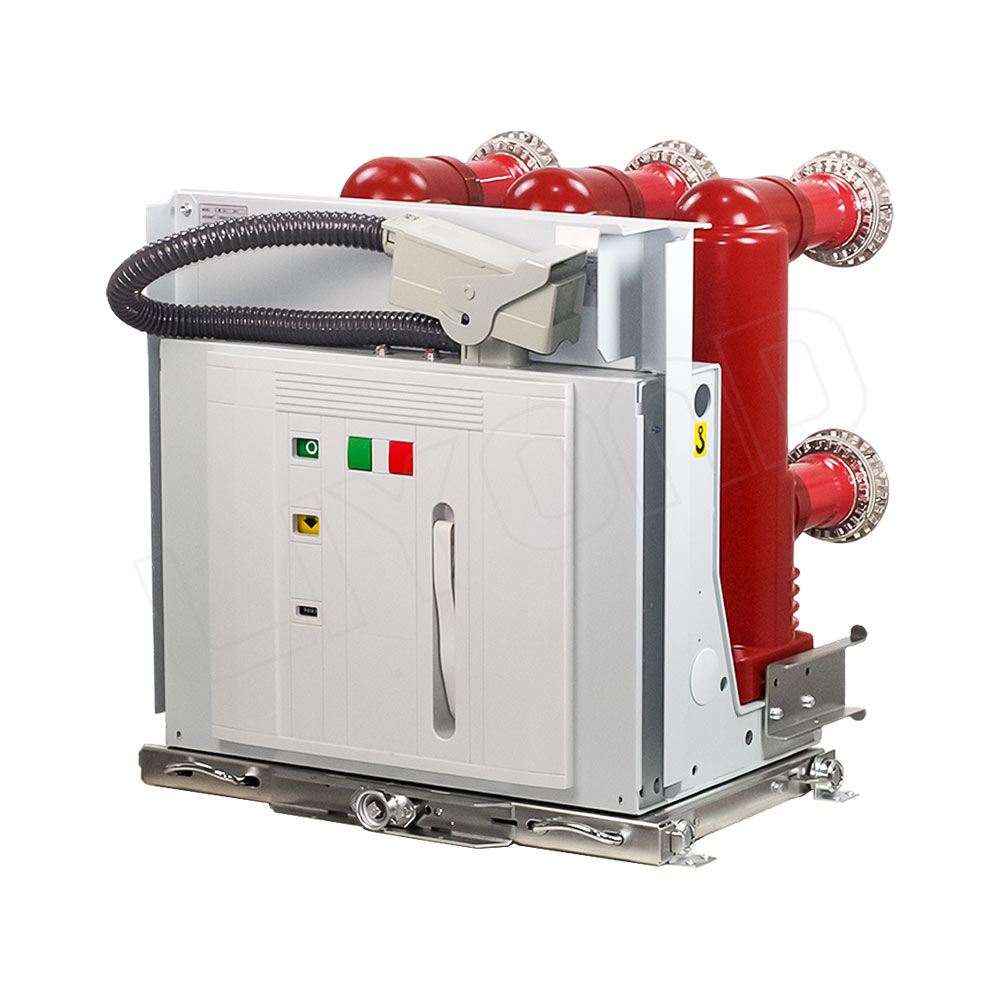

Additionally, the efficient switching of PCC switchgear relies not only on the vacuum circuit breaker but also on a complete protection and sensing link. High-precision instrument transformer products (CT/PT) serve as the sensing front-end of the system, providing the controller with real-time electrical data to ensure phase synchronization precision during grid-connected switching. Meanwhile, highly reliable load break switches and grounding switches capable of making onto short-circuits work in tandem with the circuit breaker to form a complete defensive circuit—from sensing to execution—minimizing systemic risks caused by hardware response latency.


Microgrid Trends: Digitalization and Condition Monitoring
With the evolution of modern energy systems, digital operation and maintenance have become important means to enhance microgrid reliability. As the physical front-end of the system, switchgear is transforming toward intelligent operation.
By integrating contact temperature sensors, trip/close coil monitoring devices, and mechanical travel sensors, switchgear can collect operational data in real-time and upload status information to the EMS. This data-interconnected mode allows operators to perform Condition-Based Maintenance (CBM) on switchgear rather than relying on traditional periodic inspections. For example, by continuously recording deviations in operation time, the system can provide early warnings for mechanism wear trends, avoiding switching failures caused by hidden equipment defects. This shift from “passive response” to “preventive management” is a key technical safeguard for ensuring the long-term stable operation of microgrids.
Conclusion: Strengthening Grid Resilience via Microgrid Hardware Reliability
As a key means of enhancing distribution network resilience, the operational effect of a microgrid depends on the synergy between complex control logic and a robust physical foundation. Switchgear, as the core hub of the PCC, directly determines whether the microgrid can provide reliable power support under extreme conditions.
During the design and selection process, adhering to industry standards and adopting high-performance, high-reliability hardware solutions are necessary conditions for achieving microgrid operational goals. High-performance switchgear is not only the physical bridge connecting the microgrid to the external grid but also the critical technical support for the distribution network to construct a secure defensive base when facing extreme environments and load shocks.
Get A Free Quote


Power your projects with long-lasting switchgear and switchgear components from Liyond.
