

 EN
EN RU
RU

 Home/Blogs/Industry Knowledge/Recloser vs. Circuit Breaker: How to Select for Your MV Distribution System?
 April 21, 2026
In modern power distribution, both automatic reclosers and medium voltage (MV) circuit breakers are mission-critical components, playing a vital role in ensuring grid security and operational stability. While they share overlapping functional capabilities, they are distinguished by fundamentally different design standards, operational logics, and performance envelopes. To assist power engineers and stakeholders in making informed decisions, this article provides a comprehensive breakdown of the difference between recloser and circuit breaker across core definitions, physical characteristics, mechanical endurance, and selection logic, analyzing their unique value propositions across various application dimensions.
1. Recloser vs. Breaker: Core Definitions and Regulatory Standards
1. Technical Definitions
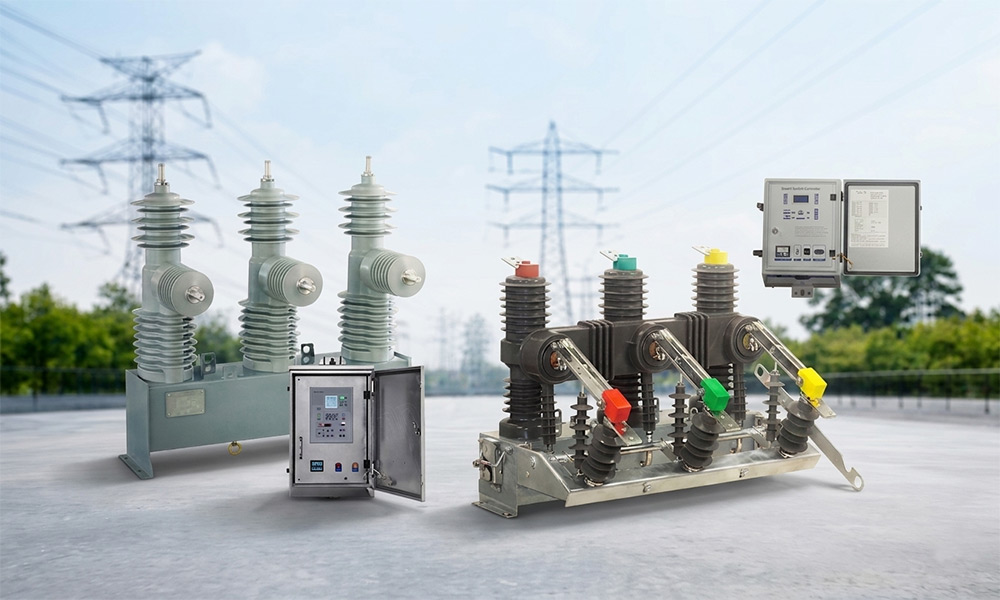
According to international standards, an auto recloser is a self-controlled apparatus designed to make, carry, and interrupt alternating current. It integrates all the necessary sensing and control elements to detect overcurrents and execute a pre-programmed sequence of operations (e.g., trip-and-reclose cycles).
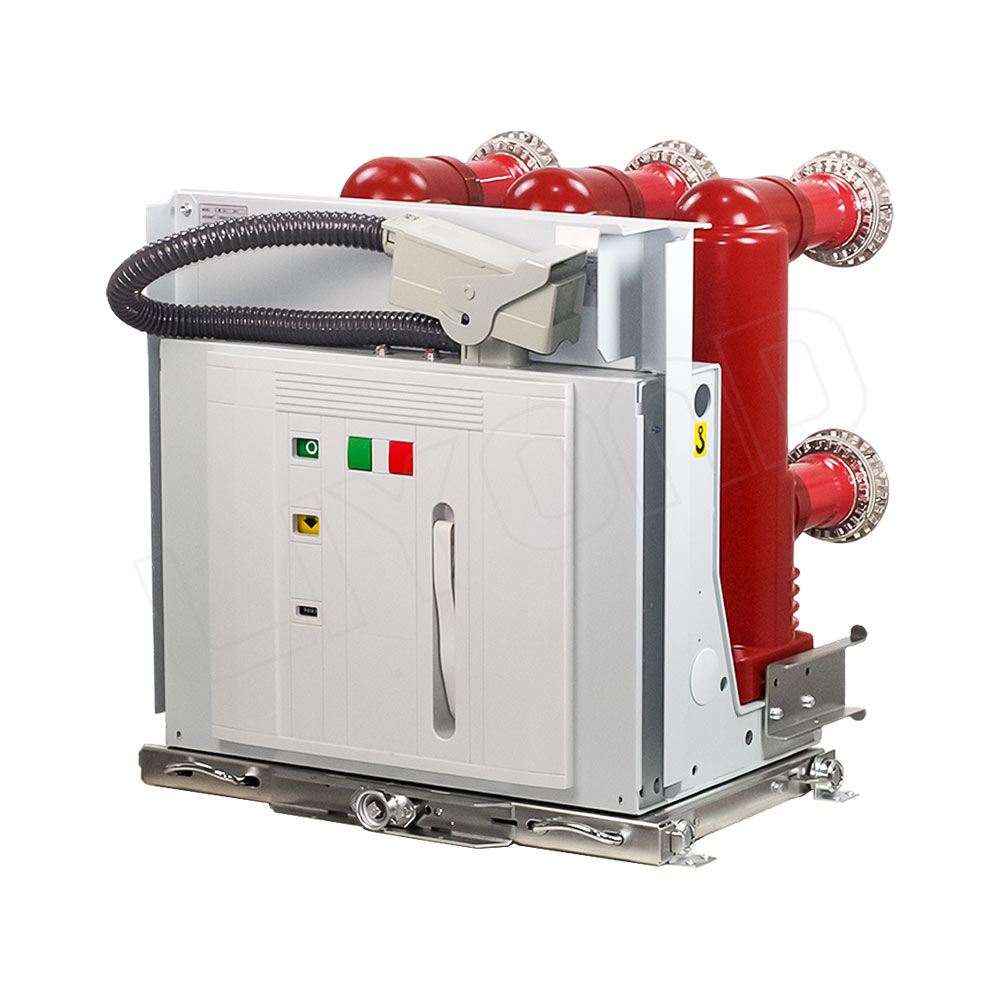
An MV circuit breaker, by contrast, is a mechanical switching device capable of making, carrying, and breaking currents under normal circuit conditions, as well as specified abnormal conditions (such as short circuits). These breakers typically utilize different insulation and arc-quenching media, such as outdoor vacuum circuit breaker or SF6 circuit breaker. In practice, when paired with external protective relays, a circuit breaker can achieve reclosing sequences similar to those of a recloser.
2. Compliance Standards
Reclosers typically comply with the dual-logo IEEE/IEC 62271-111 international standard. MV circuit breakers are governed by a suite of core IEEE standards and application guides, including C37.04 (rating structure), C37.09 (test procedures), and C37.010 (application guide). Note: Ongoing revisions are integrating the specific ratings previously found in C37.06 directly into the foundational C37.04 standard.
2. Recloser vs. Breaker: Physical Specifications and Application Scenarios
1. Electrical Performance and Capacity
A device’s rated capacity often dictates its hierarchy within the grid. Reclosers are generally rated for continuous currents of 630 A or 800 A, with short-circuit interrupting capacities typically limited to 12.5 kA or 16 kA. These are ideal for protecting feeder branches. MV circuit breakers offer a much broader spectrum of capacity options. Common ratings include 630 A, 1250 A, 2000 A, 2500 A, 3150 A, and even reaching as high as 4000 A or more. This high-capacity overhead makes them the standard choice for protecting primary mainlines and core transformers within distribution substations.
2. Physical Build and Seismic Resilience
Environmental constraints drive the design of these units. Reclosers prioritize lightweight and compact form factors, typically weighing between 100 kg and 150 kg, allowing for versatile pole-mounted deployment. Circuit breakers emphasize structural robustness, with weights often ranging from 800 kg to over 1400 kg. Since breakers are usually secured to solid concrete foundations in substations, they often come with certified seismic ratings to withstand high-intensity earthquakes—a level of resilience that reclosers, which depend on the stability of the support pole, rarely guarantee.
3. Deployment and Installation Engineering
These physical differences dictate the scope of civil works. Reclosers are designed to isolate transient faults on overhead lines and are typically “pole-mounted,” requiring minimal civil infrastructure and offering short construction cycles. The circuit breaker serves as the “heart” of the substation, usually installed in a metal-clad framework fixed to a foundation. While this requires more extensive civil engineering, it provides superior safety clearances and easier ground-level access for maintenance.
3. Recloser vs. Breaker: Mechanical Durability and Maintenance Requirements
1. Mechanical Endurance
At the standard level, both devices have similar baseline requirements for mechanical life. While international standards often set the baseline at 2,000 operations, leading medium voltage switchgear manufacturers typically engineer their units for up to 10,000 operations to ensure long-term reliability. However, for specialized industrial or core substation applications, high-performance breakers demonstrate a clear edge. For instance, while standard VS1-12 vacuum circuit breakers are rated for 5,000 to 6,000 operations, advanced series like the VBI or VSG can achieve mechanical lifespans exceeding 15,000 operations.


2. Electrical Life and Contact Wear Monitoring
The electrical life of a recloser is determined by its cumulative interruption duty (typically 100 to 250 operations at full fault current). From a maintenance perspective, reclosers have a notable limitation: because the vacuum interrupter is often embedded within solid-insulated poles, engineers cannot physically measure contact wear. Instead, they must rely on controller-based current accumulation estimates, and the interrupters are generally non-replaceable.
3. Serviceability and Replaceability
Circuit breakers are designed with a focus on lifecycle serviceability. In non-enclosed designs, maintenance crews can precisely measure contact erosion and replace vacuum interrupters if necessary. This modular approach provides significant asset protection. Furthermore, VCB mechanism allows for manual servicing and ground-level inspection without the need for bucket trucks.
4. Recloser vs. Breaker: Functional Integration and Operational Logic
1. Instrumentation and Protection Schemes
Reclosers utilize a highly integrated “all-in-one” design, which can limit scalability. Implementing complex metering or differential protection often requires external transformers, increasing costs and straining the limited space in the control cabinet. MV circuit breakers offer exceptional flexibility. Their enclosures provide ample space for up to four current transformers (CTs), accommodating sophisticated protection schemes. Additionally, the spacious low-voltage compartments facilitate the installation of various relays and meters for deep customization.
2. Operational Logic and Reclosing Sequences
Reclosers possess native, autonomous reclosing capabilities (e.g., the O-t-CO-t-CO-t-CO sequence). MV circuit breakers can execute identical or even more complex sequences when paired with advanced protection relays. For example, a ZW32 pole-mounted vacuum circuit breaker equipped with a smart controller can achieve high-precision reclosing. Because breakers typically utilize powerful spring-charged or permanent magnet mechanisms, they ensure rapid energy replenishment, delivering superior reliability during consecutive high-duty breaking tasks.
5. Recloser vs. Breaker: Economics and Long-Term ROI
The procurement landscape has shifted significantly. Historically, reclosers had a lower initial purchase price. However, as modern requirements for communication, monitoring, and automation have become standard, the manufacturing costs of high-spec reclosers have risen sharply. Conversely, the pricing for MV circuit breakers has remained relatively stable. Given their superior serviceability, longer electrical life, and flexibility in complex schemes, their total cost of ownership (TCO) often proves more competitive over the equipment’s full lifecycle.
6. How to Choose the Right Solution for MV Distribution?
Selecting the most appropriate equipment requires a balanced evaluation of grid parameters, environmental conditions, and maintenance expectations.
- Network Position and Load Profile: For substation incomers and outgoers handling high-capacity power transfer, high-performance MV circuit breakers are the preferred choice due to their stability under heavy loads. For overhead branch lines deep in the distribution network, reclosers offer a more economical and field-adaptive solution.
- Fault Levels and Structural Constraints: If the anticipated fault current exceeds 16 kA, circuit breakers are the mandatory choice, as they offer higher ratings and safer margins. Furthermore, in seismically active regions, the independent seismic certification of a breaker provides superior protection for expensive substation assets.
- Lifecycle Value vs. Accessibility: If the project site allows for regular maintenance and the goal is to maximize asset life, the breaker’s “replaceable component” design and ground-level access offer a clear financial advantage. Conversely, for remote, unmanned sites with limited space, the recloser’s integrated, low-maintenance profile is often more practical.


Conclusion
In summary, understanding the difference between auto recloser and circuit breaker is essential for grid optimization, as these two devices are not direct substitutes but rather complementary solutions within a power system. The circuit breaker, with its superior electrical endurance, configuration flexibility, and serviceability, forms the bedrock of core substation protection. The recloser, with its integrated design and rapid response to transient faults on overhead lines, is the primary driver of grid self-healing.
The most effective strategy is the coordinated deployment of both technologies. By utilizing high-performance breakers at the substation level to secure the backbone and smart reclosers at key nodes along overhead feeders, utilities can minimize outage durations and build a resilient, modern power network.
As a professional manufacturer of medium and high-voltage switchgear, Liyond is dedicated to providing global customers with premium automatic reclosers and MV circuit breakers. Supported by advanced manufacturing processes and rigorous quality control, our equipment is built to perform in the most demanding electrical environments. If you are looking for superior power distribution solutions or need expert technical consultation for your project, please contact us. The Liyond team is ready to provide the detailed product information and selection support you need to ensure a safer, more efficient grid.
Get A Free Quote


Power your projects with long-lasting switchgear and switchgear components from Liyond.
