

 EN
EN RU
RU


February 12, 2026
The global demand for electricity is entering a transformative “load surge era” at an unprecedented pace—a phenomenon fundamentally reshaping humanity’s relationship with energy. Today, electricity has transcended its status as a mere public utility, evolving into a strategic resource that defines national competitiveness and sets the upper limit for computational capacity. This structural shift occurs at the convergence of multiple global transitions: from the massive data center clusters powering a digital future to the pervasive electrification of transportation and the AI-driven Fourth Industrial Revolution. Collectively, these forces are accelerating the expansion of power demand against a backdrop of geopolitical shifts and supply chain restructuring.
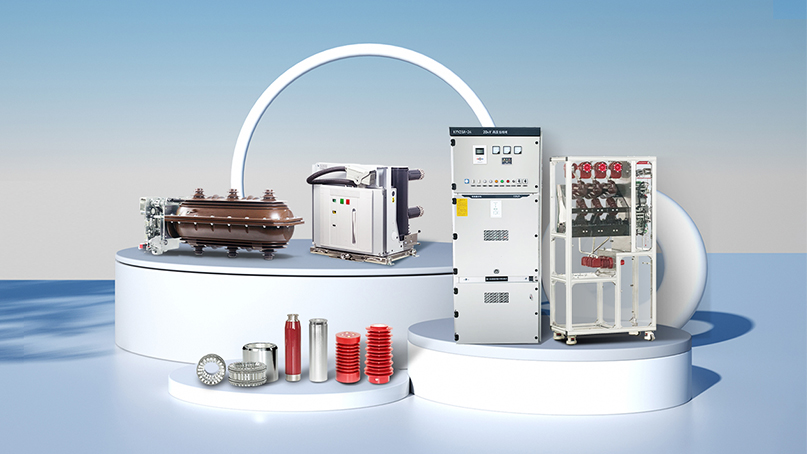
Industry experts define this phenomenon as an “Energy Supercycle.” This term captures a deep-seated, long-term structural realignment of power consumption patterns expected to span the next two decades rather than being a transient market fluctuation. According to the International Energy Agency (IEA) in its Electricity 2025 report, global electricity consumption is projected to grow by 4% annually through 2027—the fastest rate in recent years. Notably, driven by AI expansion and the reshoring of semiconductor manufacturing, power demand in the United States—which had remained stagnant for years—is expected to achieve a robust annual recovery of 3% between 2025 and 2027, posing a significant challenge to the resilience of grid infrastructure.
A Multi-Faceted Matrix of Global Power Demand
The current spike in global electricity consumption is not a linear expansion in the traditional sense, but a systemic revolution driven by interlocking structural factors:
1. Deep Electrification of End-Use Energy
Traditional energy consumption is undergoing a fundamental shift from the direct combustion of fossil fuels to electricity-driven power.
- Transportation Electrification: The large-scale adoption of electric vehicles (EVs) not only increases total energy requirements but also places severe stress on the instantaneous capacity of distribution networks.
- Industrial Decarbonization: Energy-intensive sectors like steel, cement, and chemicals are decarbonizing through technologies such as Electric Arc Furnaces (EAF) and green hydrogen. This transition from “molecular fuel” to “electron energy” makes electricity the core foundation of industrial output. It simultaneously drives demand for high-performance medium-to-high voltage switchgear and critical distribution components to ensure circuit safety and stability under intense industrial loads.


2. Climate Change Feedback Loops
The increasing frequency of extreme weather events directly impacts both supply and demand, altering power consumption patterns and infrastructure design logic:
- Growth in Thermal Loads: Frequent extreme heatwaves have triggered a surge in global cooling requirements, significantly pushing up seasonal peak loads.
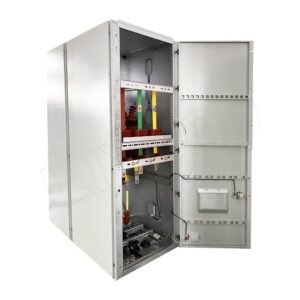
- Modernization of Defensive Assets: Extreme weather causes accelerated degradation of grid infrastructure, forcing operators to invest heavily in defensive modernization while expanding capacity. These investments are not just for handling load growth but for ensuring system survivability under climate volatility. Medium-voltage switchgear with high protection ratings and their key accessories are vital components in enhancing this grid resilience. Medium-voltage switchgear with high protection ratings and their key accessories are vital components in enhancing this grid resilience.
3. Expansion of Next-Generation Infrastructure
Artificial Intelligence and hyperscale data centers are transforming electricity from an “operating cost” into “computational capacity”:
- Energy-as-Computing Power: The IEA predicts that electricity consumption by data centers will double to exceed 1,000 TWh by 2027. Every instance of AI training and inference maps directly to physical power consumption. This 24/7 high-load operational profile places extreme demands on base-load power, making electricity supply the bottleneck for AI scaling. This trend further accelerates the demand for dedicated data center medium-voltage switchgear and intelligent power distribution solutions.
4. Transition to Low-Carbon Energy Structures
While the shift toward cleaner energy provides low-carbon power, it imposes unprecedented “flexibility compensation” pressure on the grid. The volatility of large-scale renewables (such as wind and solar) requires enhanced grid adaptability:
- Grid Connection Gaps and Peaking Pressures: By 2030, global renewable energy capacity is expected to increase by 2.6 times. However, the intermittent nature of wind and solar demands extreme grid regulation capabilities. Currently, Europe alone has over 500 GW of capacity backlogged in the interconnection queue. This mismatch between supply and demand is a direct catalyst for a long-term upward cycle in demand for transformers, High-Voltage Direct Current (HVDC) equipment, and smart switchgear and circuit breaker technologies capable of precise load distribution.
Supply Chain Adjustments and Response in Infrastructure
As grid modernization accelerates globally, the power equipment supply chain is navigating a complex environment. Influenced by raw material supply rhythms, technical labor shortages, and unexpected load growth, delivery lead times for core hardware—including transformers, medium-to-high voltage switchgear, and primary switchgear components—have seen widespread extensions. These fluctuations reflect the ongoing adjustment between global manufacturing capacity and rapidly evolving energy transition needs.
Persistent supply chain pressures are prompting industry stakeholders to rethink procurement strategies and collaborative models. To manage construction timeline uncertainties, the power sector is shifting from project-based, ad-hoc procurement toward forward-looking strategic inventory management and capacity reservation. By strengthening technical synergy with electrical switchgear suppliers and localizing manufacturing footprints, the industry aims to build a more adaptive supply system to support a stable energy transition.
Strategic Reorganization and Localization of Global Capacity
In response to sustained supply pressures, global power technology providers are implementing massive capital expenditure plans to regionalize manufacturing and rebuild supply chain resilience. Industry leaders such as Hitachi Energy, ABB, GE Vernova, and Schneider Electric are significantly ramping up capacity for critical equipment—particularly in high-growth markets like North America—covering transformers, medium-voltage products, and circuit breakers.
These investments are not merely to alleviate current bottlenecks but reflect a strategic shift in the global power supply chain from “global sourcing” toward “nearshoring.” By establishing production clusters near demand centers and strengthening domestic manufacturing, the industry seeks to mitigate risks associated with trade policies and geopolitical volatility, creating a more agile and resilient ecosystem to support the continuity of the global energy transition.
Future Outlook: Resilience and the Reshaping of Energy Transition
Despite ongoing geopolitical and trade policy uncertainties, the structural momentum of electricity demand growth is irreversible. According to IEA assessments, as the share of clean energy rises, the growth rate of grid flexibility requirements will be more than double the growth rate of electricity demand itself.
This implies that the future industry focus will center on “flexibility” and “systemic resilience.” The logic of the global power supply chain is undergoing a profound reconfiguration: the once-dominant principle of “cost efficiency” is steadily giving way to “supply resilience” centered on energy security. Manufacturing footprints are rapidly migrating toward demand centers. Balancing large-scale capacity expansion with the deployment of high-performance switchgear technology—while ensuring sustainability and defense against extreme climate events—will be the defining factor in the success of the global energy transition.
About Us
As a dedicated partner in the global grid modernization journey, Liyond is committed to providing professional, high-performance medium-to-high voltage switchgear and core accessories. Facing the complex challenges of surging power demand, we leverage our deep technical expertise and reliable product quality to provide robust power distribution for industrial decarbonization, data centers, and renewable energy integration. If you are looking for flexible switchgear solutions that enhance system resilience and optimize supply chain response, please feel free to contact us about related switchgear and components products.
Source:
- T&D World: Meeting Growing Electricity Demand in the Age of Tariffs, AI, Data Centers and Downturn
- International Energy Agency (IEA): Electricity 2025 Report
Get A Free Quote


Power your projects with long-lasting switchgear and switchgear components from Liyond.
