

 EN
EN RU
RU


October 13, 2025
An investment in medium-voltage (MV) switchgear is a long-term commitment spanning to years. However, when evaluating dielectric media, many enterprises focus narrowly on initial procurement costs and physical performance (such as compactness), often overlooking three critical factors that influence the Total Cost of Ownership () over the next decade: the simplification of maintenance processes, environmental compliance management costs, and asset decommissioning strategies.
The choice of dielectric medium fundamentally determines the nature of these long-term costs. Therefore, we will analyze the subtle balance between performance matching and cost avoidance across the three major insulation types—gas, air, and solid—from a forward-looking perspective.
I. Core Value Trade-offs: Space Efficiency and Environmental Adaptability
The physical properties of the dielectric medium are the primary factor dictating the design and footprint of MV switchgear. It determines the equipment’s volume and occupied area. Furthermore, it profoundly influences the switchgear’s resilience to environmental conditions (as such as humidity, dust, and temperature), which in turn determines long-term reliability. Consequently, at the initial investment stage, the choice of medium is not merely a technical parameter balance, but a critical financial decision concerning expensive land costs, construction investment, and future environmental risks.
Non-Gas Insulation (Air / Solid ):
- Maintenance Friendliness: Air- or solid-insulated switchgear offers greater operational freedom, free from the compliance and financial risks associated with gas leakage.
- Product Positioning: The series (Air-Insulated Metal-Clad Switchgear) provides excellent accessibility for maintenance due to its withdrawable design, while Solid-Insulated strikes a beneficial balance between compactness and maintenance-free operation.
Gas Insulation ():
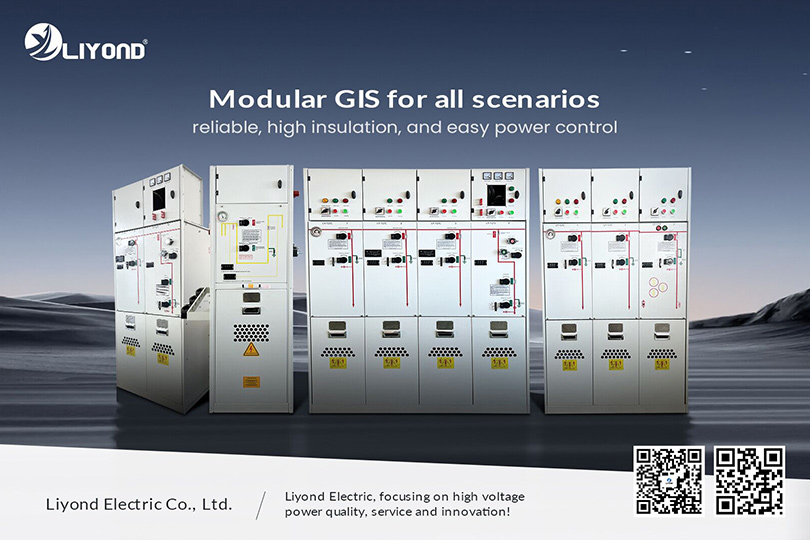
- Maximized Space : gas enables minimized switchgear volume due to its superior insulating properties. In high land-cost areas like urban centers or underground facilities, the savings in land and construction costs provided by MV GIS switchgear is an irreplaceable core value.
- High Environmental Isolation: The fully sealed design of offers maximum protection against moisture, dust, and corrosion, ensuring the highest operational stability in extreme or harsh environments.
- Regulatory Management and Long-Term Investment: As a greenhouse gas, the use and management of are subject to global regulations. For asset owners, the long-term model must account for:
- Leakage Management Costs: With the development of carbon trading and environmental taxation policies, gas leakage can translate into additional operational expenses.
- Asset Value Protection: The value of switchgear must be balanced against future regulatory compliance investments through its extended service life and ultimate reliability.
II. Operating Expense () Considerations: Balancing Simplification and Professional Commitment
Over the entire life cycle of the switchgear, Operating and Maintenance () expenditures often surpass the initial capital investment. The choice of dielectric medium directly dictates the frequency and complexity of maintenance, as well as the professional expertise required of the O&M personnel. Therefore, a deep analysis of these interacting factors is essential for accurately forecasting long-term .
O&M Freedom of Non-Gas Switchgear:
- Simplified Maintenance and Rapid Recovery: The withdrawable design of the series allows for quick, low-risk replacement of vacuum circuit breakers, requiring no complex processing of the insulating medium itself. This significantly lowers the professional barriers and time requirements for O&M personnel, achieving long-term labor savings.
- Fault Handling: The modular design of and makes fault diagnosis and isolation more direct and rapid.
The High-Specification O&M Commitment of :
- Investment for High Reliability: The superior operational stability of stems from its rigorous sealing and maintenance requirements. This investment is the necessary cost to ensure the remains in optimal sealed and insulating condition.
- Return on Investment: O&M requires specialized equipment and certified personnel. While the initial commitment is higher, it yields the highest operational stability and the fewest unexpected downtime events.
III. Asset Decommissioning and Liquidity Strategy
Although asset retirement occurs at the end of the lifecycle, it is an indispensable and often underestimated component of the assessment. The choice of dielectric medium at this stage determines the complexity of the disposal process, especially for equipment containing regulated gases. Therefore, planning the decommissioning strategy at the point of initial investment is directly related to the asset’s future market liquidity and final closure costs.
- Simplified Process for Non-Gas Switchgear: Air- or solid-insulated switchgear does not contain gases requiring special treatment upon decommissioning. The process simplifies to standard metal recycling, resulting in the lowest retirement costs and higher asset liquidity.
- Decommissioning Management: Upon retirement, gas must undergo strict recovery and disposal procedures. This adds to the time, cost, and legal responsibility of the decommissioning process. This cost must be incorporated into the overall model of .
Conclusion: Dielectric Medium is Not a Choice, But a Match
Following a comprehensive assessment of performance, O&M, and retirement costs, the selection of the dielectric medium is clearly a major strategic investment influencing an enterprise’s future . It requires decision-makers to precisely balance the current performance investment with the potential future cost-avoidance benefits to determine the solution that best aligns with the enterprise’s long-term operational goals.
- Space and Environmental Isolation Priority ( / ): When a project’s core demands are compact space and maximum environmental isolation. demonstrates absolute leadership in performance and isolation. Its ultimate reliability is secured by high-specification professional O&M commitment, yielding the highest space and operational stability.
- O&M Simplification and Compliance Priority (Non-Gas / / ): When your core value proposition centers on low , environmental sustainability, and standardized maintenance procedures. You accept a moderate compromise on space in exchange for the lowest O&M costs, compliance risks, and the simplest asset retirement process.
Ultimately, framing the discussion of dielectric media within the strategic context of financial risk and asset liquidity ensures that your MV switchgear investment remains not only a guarantor of physical performance but also a resilient asset that maintains high competitiveness and value over its -year lifespan.
Ultimately, framing the discussion of dielectric media within the strategic context of financial risk and asset liquidity enrures that your MV switchgear investment remains not only a guarantor of physical performance but also a resilient asset that maintains high competitiveness and value over its 20-year lifespan.
Get A Free Quote


Power your projects with long-lasting switchgear and switchgear components from Liyond.
