

 EN
EN RU
RU


December 17, 2025
The earthing switch is a critical component in the safety architecture of Medium Voltage (MV) power systems, ensuring personnel safety and equipment reliability. Serving as the last line of defense for reliable equipment grounding, its core function is to ensure that the line is completely discharged, free of residual voltage, and without stored energy before maintenance work begins. Consequently, it must possess high standards of mechanical and electrical performance. Crucially, its making capability when subjected to sudden fault currents is a life-or-death metric for protecting both the system and personnel. A deep understanding of the earthing switch in switchgear, specifically its functional role and the decisive factors influencing its making capability, is essential for securing long-term operational stability of the power system.
I. Core Safety Function of the Earthing Switch
The MV earthing switch is far more than a simple grounding circuit. A common misconception among some manufacturers and users is that a grounding switch is merely a basic grounding device, requiring only closure and continuity. This often leads to the use of simple, low-cost materials for critical components like contacts and springs, prioritizing ease of operation over core performance and long-term quality. In reality, the fundamental role of the earthing switch is to safeguard personnel during maintenance operations. Medium voltage switchgear, typically operating at voltage levels of 10 kV, 35 kV, and above, must be reliably earthed before any inspection or repair can commence.
While applying portable earth leads is one method, using a dedicated earthing switch is generally a safer and more reliable means. Regardless of whether the equipment is a load or a long-distance cable, residual charges can still be stored due to factors like capacitance to ground and inductive circuits, even after the main circuit is disconnected. These charges require significant time to dissipate. If maintenance personnel touch the equipment before this residual energy is released, the human body can complete the circuit, leading to an electrical discharge and potential injury. Therefore, an earthing switch with sufficient short-circuit making capability is vital for safely and immediately discharging these residual line charges.

II. System Function and Configuration Requirements
The specific functional requirements and technical specifications of the earthing switch are not fixed; they are determined by its installation location and application scenario within the power system. Therefore, it is necessary to clearly differentiate the functional positioning and configuration requirements based on system location.
Functions of the Earthing Switch in the Power System
- Establishing Intentional Earth: Satisfies protection requirements by providing a clear mechanical earth point in the circuit, confirming zero residual voltage, and ensuring safety during inspection or line outage.
- Replacing Portable Earth Leads: Reliably grounds MV equipment and lines during maintenance to guarantee personnel safety.
Configuration Requirements Based on Location
- Circuit Breaker Side Configuration: Typically located beside the disconnectors on both sides of the circuit breaker. Its purpose is to provide effective grounding on both sides during the maintenance of vacuum circuit breaker. These earthing switches generally do not require making capability, only the ability to withstand the short-circuit current (i.e., dynamic and thermal stability).
- Line Side Configuration: Primarily required to possess the making and breaking capability for both short-circuit current and induced current, which is necessary to protect downstream equipment from damage.
III. Operational Interlocking and Voltage Status Indication
The operational interlocking mechanism is the lifeblood for preventing the accidental closing of the earthing switch while the main circuit is energized. It is central to realizing anti-maloperation and safety compliance. When the switching equipment (such as the circuit breaker) is in the test or isolated position, the closing operation of the earthing switch must adhere to stringent interlocking logic:
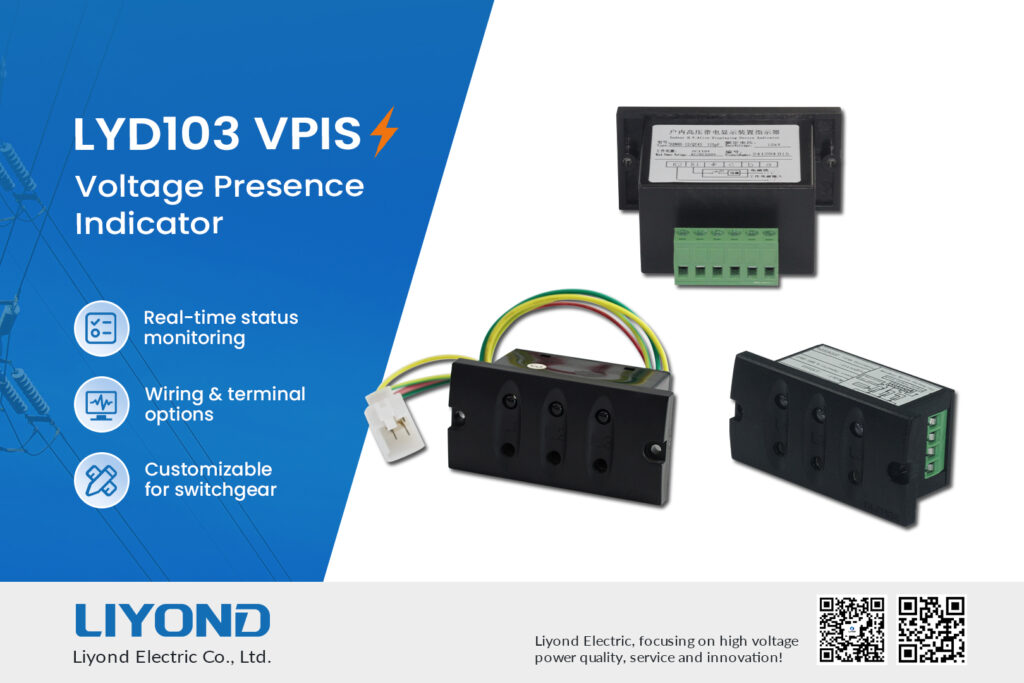
The prerequisite for closing is that the line side must indicate a “dead” status. This is typically verified in real-time by a Voltage Presence Indicating System (VPIS), sometimes referred to as DDS/BDS. Furthermore, to ensure the reliability of the safety system itself, both the voltage indicator system and the Lockout Solenoid must indicate normal operating status.
The core of the interlocking mechanism relies on the Fail-Safe principle:
- Interlock Condition: The solenoid is only permitted to unlock the closing operation when the VPIS indicates “no voltage.”
- Fault Locking Mechanism: If the sensor of the voltage indicator system malfunctions or is disconnected, or if the Lockout Solenoid itself loses power or fails, the operational circuit will be immediately locked (blocked). This design maximizes operator safety during system or auxiliary power failure by forcibly preventing the grounding switch from closing whenever any safety indication or actuator is in an non-normal state.
IV. Decisive Technical Factors for Making Capability
Regarding the earthing switch’s making capability, the industry typically refers to IEC or related standards, where E2 class making capability for 5 operations is a critical performance indicator in high-demand applications. Making tests are performed at rated voltage, covering short-circuit current levels such as 63 kA, 80 kA, 100 kA, and 130 kA. The primary technical factors influencing this capability include:
- Closing Speed: A faster closing speed effectively reduces contact pre-arcing erosion and shortens the arcing time. For example, 12/24 kV air-insulated switches typically have a closing speed of 4 – 5 m/s, while SF6 insulated types only need 2 – 3 m/s. Due to the lower dielectric strength of eco-friendly gases compared to SF6, achieving the required making capacity is challenging without increasing the speed. A 40.5 kV air-insulated switch may require speeds up to 6 – 7 m/s.
- Contact Geometry: The stationary contacts often utilize a round or rod shape to ensure a uniform electric field. The moving contacts must also be optimally shaped to guarantee uniform electric field distribution, thereby minimizing the dielectric breakdown distance.
- Contact Material: Highly erosion-resistant materials effectively reduce burning. Specifically for switches rated at 40.5 kV and above, using Copper-Tungsten (CuW) arcing contacts or applying CuW alloy to the contact tips is a vital measure for minimizing erosion.
- Contact Pressure: Contact pressure is a key indicator for determining the earthing switch’s ability to withstand thermal stability. This pressure allows for the calculation of contact resistance and voltage drop, which in turn determines whether the contacts will weld under thermal stability conditions. Furthermore, appropriate pressure ensures the contacts stop quickly after closing, preventing rebound and resulting erosion.
- Alignment: The closing operation demands extremely high concentricity (alignment). Any deviation or poor alignment will lead to uneven burning of the contacts, intensifying erosion on one side and compromising subsequent making performance.
- Connection Arrangement: Relates to the direction of the electrodynamic force during the closing operation. If the electrodynamic force is favorable (assisting closure), it will accelerate the closing speed and reduce erosion; conversely, an unfavorable direction will slow the speed and prolong contact burning.
- Insulation Medium: The arc-quenching performance and dielectric strength of the medium directly impact the pre-arcing distance and erosion level. SF6 gas has high dielectric strength, approximately 3 times that of air, significantly reducing contact erosion at the same closing speed. As the gas gap in SF6 is smaller, the moving blade length is relatively shorter, typically necessitating an increase in angular velocity to ensure sufficient linear closing speed.
V. Design Principles and Performance Synergy
The making capability of a medium voltage earthing switch is a systemic engineering challenge dictated by the coupling of multiple technical factors. Closing speed, connection arrangement, contact pressure, and contact material are the key elements influencing its performance.
Achieving superior making capability is fundamentally about synergistic balance among these design factors. For instance, while increasing the closing speed is a direct path to reducing arc erosion, a lack of holistic consideration means blindly increasing speed will dramatically increase the required spring stored energy. This, in turn, leads to higher operating force, reduced mechanism longevity, and increased production costs. Therefore, the optimal design aims for maximum performance with minimal input, by fully leveraging physical principles. By judiciously configuring the main circuit connections, the electrodynamic force generated by the short-circuit current can be cleverly used to assist the contacts’ rapid closure, effectively reducing excessive reliance on the mechanical operating mechanism. This balance and synergy in design is crucial for ensuring the earthing switch achieves high making capability while maintaining high reliability and long service life.
VI. Conclusion
In summary, the medium voltage earthing switch transcends its role as a simple circuit component; its core value in the power system lies in simultaneously meeting exceptionally high personnel safety standards and stringent electrical technical requirements. Through the coordinated and refined design of materials, kinematics, and electrodynamics, the earthing switch is enabled to reliably execute its dual core responsibility—protecting personnel safety and maintaining system stability—throughout its service life. The high-reliability design inherently results in reduced maintenance needs and maximized equipment uptime, ultimately delivering significant economic benefits to the MV infrastructure by dictating the system’s safety margin, long-term stability, and overall economic value.
Get A Free Quote


Power your projects with long-lasting switchgear and switchgear components from Liyond.
