

 EN
EN RU
RU


August 19, 2025
An embedded pole is a revolutionary component in vacuum circuit breakers (VCBs), designed to significantly enhance their performance and reliability. It involves simultaneously embedding the vacuum interrupter and all related conductive parts of the circuit breaker into a solid insulating material, typically epoxy resin or a thermoplastic. This advanced manufacturing process transforms the entire pole of the circuit breaker into a sealed, integral unit, providing superior insulation and mechanical protection compared to traditional assembled designs. The embedded pole has become a standard in modern medium-voltage switchgear due to its numerous benefits.
Embedded Pole Construction
The embedded pole construction is a key innovation that integrates multiple components into a single, robust unit. At its core, an embedded pole encapsulates the vacuum interrupter, which is the heart of the arc extinguishing system in a VCB.
The typical construction of an embedded pole includes:
- Upper Terminal: Provides the connection point for the upper circuit.
- Vacuum Interrupter: The sealed chamber where arc extinction occurs. This critical component consists of a gas-insulated insulating shell, static-end conductive block, a shielding cylinder, a moving and static contact, a bellows, a moving end cover, a static conductive rod, and a movable end conductive rod. Its main function is to quickly extinguish the arc and suppress the current.
- Epoxy/Thermoplastic Material: This solid insulating material (like epoxy resin, as often seen) is poured around the internal components, forming the protective and insulating outer body of the embedded pole.
- Conductive Rod: Connects the vacuum interrupter contacts to the external terminals.
- Lower Terminal: Provides the connection point for the lower circuit.
- Soft Connection: Provides flexibility between internal conductive parts.
- Contact Spring: Ensures proper contact pressure.
- Push Rod: Transmits the operating mechanism’s force to the moving contact.
- Fixed Point: Provides structural support.
- Connection to the Operating Mechanism: Links the pole to the VCB’s operating mechanism for opening and closing actions.

During its manufacturing, the vacuum interrupter and related conductive parts are precisely positioned and then cast into the solid insulating material. This process ensures a robust, sealed unit, where the conductive parts are deeply embedded within the insulation.
Key Features and Advantages of Embedded Pole
The design and features of the embedded pole offer significant advantages that contribute to the enhanced performance and reliability of vacuum circuit breakers:
- Modular Design and High Reliability: The embedded pole adopts a modular design with a simple structure, fewer detachable parts, and simplified installation. This significantly reduces assembly errors and greatly improves the overall reliability and stability of the circuit breaker. Compared to traditional assembled poles, the number of parts is greatly reduced (e.g., overlapping surfaces of conductors are reduced from 6 to 3 groups, and connecting bolts from 8 to 1-3), leading to fewer potential points of failure.
- Enhanced Insulation Reliability: The solid encapsulation of the embedded pole transforms surface insulation into volume insulation. This eliminates air gaps, reduces surface tracking risks from humidity or dust, and provides high insulation strength. The vacuum interrupter, protected by this solid material, is shielded from external environmental influences like dust, moisture, small animals, or condensation, even in hot, humid, or heavily polluted environments.
- Improved Mechanical Strength: The solid casting of the embedded pole provides robust mechanical support and protection for the delicate vacuum interrupter and internal conductive parts. This strengthens the unit against accidental mechanical impacts during assembly, transport, and operation, and helps withstand operating vibrations and thermal cycles.
- Miniaturization: By using epoxy resin as the insulating medium, the design allows for reduced phase spacing, which in turn leads to a smaller overall size for the vacuum circuit breaker and the associated MV switchgear. This compactness is a key benefit in modern, space-constrained installations.
- Maintenance-Free Operation: Since the vacuum interrupter and live parts are fully protected within the solid encapsulation, the embedded pole significantly reduces or even eliminates the need for periodic inspection, cleaning, or re-tightening of connections. This leads to a longer service life and considerably lower maintenance costs, making the circuit breaker effectively maintenance-free during its operational period.
Types of Embedded Poles
Embedded poles come in various configurations to meet diverse application requirements, primarily categorized by their electrical parameters and physical outlet direction.
Embedded Pole by Current and Voltage
Embedded poles are designed to handle different current and voltage ratings, reflecting their application across various medium voltage levels.
- For Small Current (1600A and below): These embedded poles are typically more compact and designed for lower current applications within the medium voltage range.
- For Heavy Current (2000A and above): These are larger and more robust, designed to safely conduct and interrupt higher currents, including very high rated currents (e.g., up to 4000A) and high rated short-circuit breaking currents (e.g., up to 50kA).
- By Voltage: Embedded poles are produced for various voltage levels, commonly including 12kV, 24kV, and 40.5kV. The physical size and insulation design often vary significantly between these voltage classes, with higher voltages typically requiring larger and more robust designs.
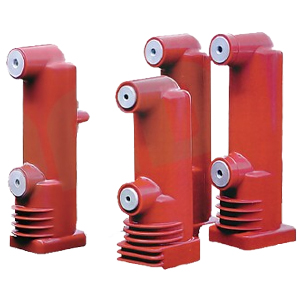
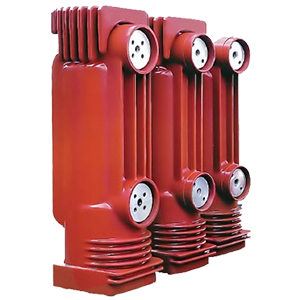
Embedded Pole by Outlet Direction
The design of the embedded pole also accounts for how the electrical connections are made, influencing the overall design of the vacuum circuit breaker.
- Side Outlet: This configuration positions the connection terminals on the side of the embedded pole, suitable for certain VCB designs where horizontal connections are preferred.
- Upper Outlet (ABB type): This configuration features terminals designed for connection from the top, often seen in specific VCB models or switchgear arrangements.

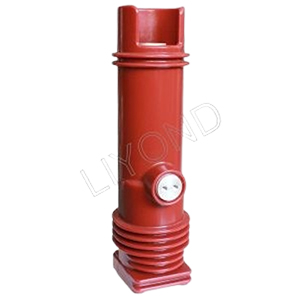
Liyond Embedded Pole Specifications and Ordering Information
As a professional medium voltage switchgear manufacturer, Liyond supplies the above various embedded pole types to meet diverse project requirements. Clients can choose the embedded pole types according to their specific needs. To facilitate precise product selection and a smooth procurement process, here are the key technical parameters, our model nomenclature, and essential ordering instructions for embedded poles. These parameters define the products’ operational limits and performance capabilities.
Our embedded pole products follow a standardized model nomenclature (e.g., EEP – □/□ – □) to clearly indicate their specifications.
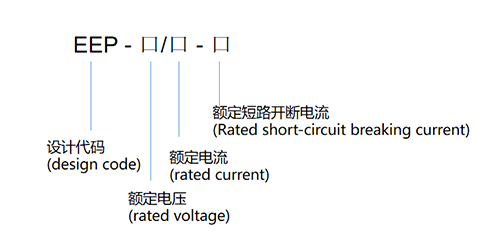
| Parameter | Values |
| Rated Frequency | 50HZ, 60HZ |
| Rated Voltage | 12kV, 24kV, 40.5kV |
| Rated Current | 630A, 1250A, 1600A, 2000A, 2500A, 3150A, 4000A |
| Rated Short-circuit Breaking Current | 20KA, 25KA, 31.5KA, 40KA, 50KA |
| Rated Short Circuit Duration | 0.5S, 1S, 3S, 4S |
Ordering Instructions for Embedded Poles:
When placing an order for embedded poles, please provide the following essential details to ensure accurate product selection and delivery:
- Product Model No.: Specify the exact model number (e.g., using the EEP nomenclature described above).
- Product’s Rated Voltage, Rated Current, Short-time Breaking Current: Provide all relevant electrical ratings to ensure proper matching with your application requirements.
- Product’s Drawing: If available or required for custom specifications, please provide the relevant drawing.
- Vacuum Interrupter Brand: If there’s a specific brand preference for the vacuum interrupter embedded within the pole, please clearly state your requirement.
By understanding the diverse types, specific technical parameters, and clear model nomenclature of our embedded poles, clients can confidently select the precise product for their needs. To ensure the highest quality and customer satisfaction, we also encourage clients to perform a basic inspection upon receipt, including checking dimensions against drawings and visually inspecting for any surface imperfections. This attention to detail underscores our commitment to delivering superior products.
Usage and Application of Embedded Poles
The embedded pole design significantly influences the overall structure and application versatility of vacuum circuit breakers. They are crucial components that enable modern VCBs to be compact, reliable, and adaptable to flexible switchgear solutions.
Embedded Pole in Front-Type VCBs
In front-type VCBs, the circuit breaker mechanism and the embedded poles are typically arranged such that the primary connections are accessible from the front of the switchgear panel. This design allows for easier installation, maintenance, and wiring from the front, making it common in many indoor medium-voltage switchgear solutions. The compact nature of the embedded pole helps in achieving smaller footprint designs for these VCBs.

Embedded Pole in Side-Mounted VCBs
Side-mounted type VCBs utilize embedded poles where the pole assemblies are positioned in a different orientation, often allowing for a more streamlined or specific compact arrangement within the switchgear. This design can be beneficial for optimizing space or for specific busbar configurations, offering flexibility in switchgear layout and potentially enabling narrower panel designs.
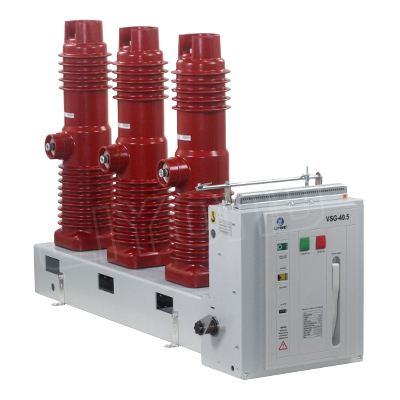
The Embedded Pole: A Cornerstone of Modern VCB Technology
The embedded pole stands as a pivotal advancement in vacuum circuit breaker technology, fundamentally enhancing the reliability, safety, and efficiency of medium-voltage power systems. Through its robust construction, which seamlessly integrates the vacuum interrupter within a solid insulating material, it offers superior dielectric strength, improved mechanical protection, and a significant reduction in maintenance requirements. The diverse types of embedded poles, categorized by electrical parameters and outlet configurations, ensure adaptability across a wide range of applications, from front-type to lateral-type VCBs. As an integral component, the embedded pole not only contributes to the miniaturization of switchgear but also plays a critical role in ensuring long-term, maintenance-free operation, making it an indispensable solution for modern electrical infrastructure.
Get A Free Quote


Power your projects with long-lasting switchgear and switchgear components from Liyond.
